Pressure Washer K2: The Truth About K2 Pressure Washers for Home Exteriors
Most people think a pressure washer’s job is to blast dirt off surfaces with as much force as possible. That’s backwards. A K2 pressure washer exists to clean without destroying the thing you’re cleaning. The K2 class sits at the bottom of the power scale, and for most home and interior-adjacent exterior work, that’s exactly where you want to be.
The Kärcher K2 series (and similar compact units from other brands) delivers between 1,400 and 1,600 PSI at roughly 1.25 GPM. Compare that to a gas-powered 3,200 PSI unit and the K2 looks weak. But here’s what nobody tells you: 3,200 PSI will strip paint, gouge soft wood, and force water behind siding. The K2 will not. For cleaning patio furniture, car mats, window screens, balcony railings, and even indoor-outdoor rugs, the K2 is the safer default.
This guide covers what a K2 actually does well, what it fails at, and how to use one without ruining your stuff.
What a K2 Pressure Washer Actually Cleans Well
I’ll say it plainly: a K2 is a maintenance tool, not a restoration tool. If something is already clean and you want to keep it that way, the K2 is perfect. If something has years of black mold, caked mud, or peeling paint, you need something else.
The Kärcher K2 Classic (around $100–$130) and the Kärcher K2 Follow Me ($150–$180) both fall in this range. The Follow Me has a four-wheel base and integrated hose reel, which matters more than you’d think when you’re dragging it across a deck.
Surfaces that suit a K2
- Plastic patio chairs and tables
- Aluminum or vinyl siding (with the low-pressure nozzle)
- Car floor mats and rubber trunk liners
- Window screens removed from frames
- Composite decking (not wood — more on that below)
- Trash bins and recycling containers
- Bicycles and strollers
The key number: 1,500 PSI at a 25-degree fan nozzle held 12 inches away delivers roughly 800–900 PSI of effective cleaning force. That’s enough to lift surface dirt without etching plastic or pushing water into seams.
Where it falls short
A K2 will not remove oil stains from a driveway. It will not strip old stain from a fence. It will not clean second-story siding without a ladder and a lot of patience. The flow rate — about 1.25 gallons per minute — simply doesn’t carry enough water volume to rinse away heavy debris quickly. You’ll spend twice as long on a concrete patio as you would with a 2.5 GPM unit.
K2 vs. K3 vs. K4: The Real Differences That Matter

Kärcher’s numbering system confuses people. Higher number means more power, but the jump from K2 to K3 is smaller than the jump from K3 to K4. Here’s the breakdown that actually matters for home use:
| Model class | PSI | GPM | Best for | Typical price |
|---|---|---|---|---|
| K2 | 1,400–1,600 | 1.25 | Light furniture, screens, mats, small patios | $100–$180 |
| K3 | 1,800–2,000 | 1.4 | Mid-size patios, car wheels, fences | $180–$250 |
| K4 | 2,100–2,300 | 1.5 | Long driveways, siding, stubborn grime | $250–$350 |
| K5 | 2,400–2,700 | 1.6 | Large properties, frequent heavy cleaning | $350–$500 |
My take: if you live in an apartment or townhouse with a small balcony or patio, the K2 is the right size. If you have a detached house with a driveway longer than 20 feet, skip straight to the K4. The K2 will do the job eventually, but you’ll resent it.
The One Mistake That Ruins Wood Decks
Using a K2 on a wood deck with the standard fan nozzle is a mistake. It’s not that the K2 is too powerful — it’s that wood is too soft. Even 1,500 PSI at close range will furrow cedar and pine. The grain lifts, the surface roughens, and suddenly your deck needs sanding before it can be sealed.
If you must clean a wood deck with a K2, use the lowest-pressure nozzle (usually the black soap nozzle or a dedicated soft-wash attachment) and hold it at least 18 inches away. Better yet, use a deck brush and a hose. The K2’s job here is rinsing, not cleaning.
Composite decking from brands like Trex or TimberTech handles the K2 fine. The material is dense enough to resist the spray. Just keep the nozzle moving and avoid the seams where water can force its way underneath.
Setting Up a K2 for Indoor-Adjacent Cleaning
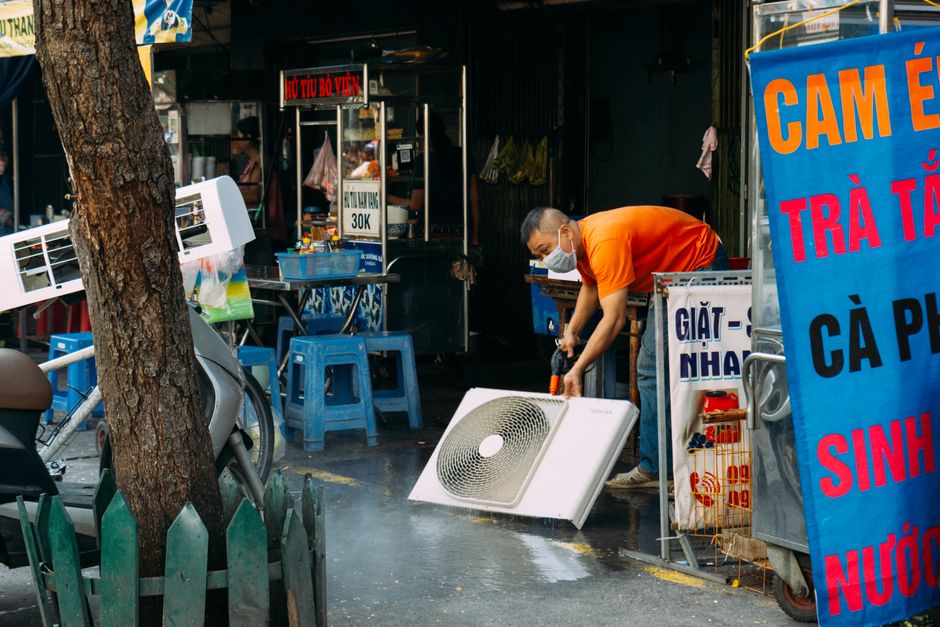
Most people don’t think of a pressure washer as a home interior tool. But several tasks bridge the gap between inside and outside, and the K2 handles them better than any other tool I’ve tried.
Indoor-outdoor rugs, for example. A 5×8 polypropylene rug covered in dog hair and coffee spills can go outside, get a light spray with the K2, and dry in an afternoon. You can’t do that with a vacuum. The same goes for rubber-backed kitchen mats and entryway runners.
Window screens are another one. Remove them, lean them against a wall, and spray from the inside out at a 40-degree angle. The K2’s low flow rate means you won’t bend the aluminum frames. A garden hose with a nozzle actually causes more damage because the flow is less controlled.
The Greenworks 1600 PSI electric pressure washer ($120–$140) is a solid K2 alternative if you want something lighter than the Kärcher. It weighs 16 pounds, uses a standard garden hose connection, and has a soap tank built into the body. The tradeoff: the hose is shorter, and the plastic wand feels flimsier.
Soap, Attachments, and the Accessories That Actually Help
Skip the expensive Kärcher-branded detergents. They work fine, but they cost $15–$20 a bottle and you’ll burn through them quickly. A generic car wash soap or a mild all-purpose cleaner diluted 10:1 does the same job for a third of the price.
One attachment worth buying: a 15-degree turbo nozzle. It spins the water stream in a tight circle, which increases effective cleaning power without increasing pressure at the pump. For the K2, the turbo nozzle makes concrete and brick noticeably easier to clean. It costs about $25–$35 and fits any Kärcher K-series unit.
The foam cannon attachments sold on Amazon for $20 are fun but mostly useless on a K2. The flow rate is too low to generate thick foam. You’ll get a thin sudsy spray that runs off before it does anything. Save your money.
If you’re buying a K2, get the version with the hose reel. The Follow Me model includes it, and the difference in setup and teardown time is real. Wrangling a 20-foot hose that wants to kink is the worst part of using a compact pressure washer.
When You Should Skip the K2 Entirely
Here’s the honest answer.
If you have a driveway longer than two cars, buy a K4 or a gas unit. The K2’s 1.25 GPM flow rate means you’ll spend an hour on a job that should take 20 minutes. The time cost outweighs the money saved.
If you’re cleaning a house exterior with wood siding, don’t use a pressure washer at all. Rent a soft-wash system or hire a pro. Pressure washers and wood siding don’t mix, regardless of PSI.
If you want to strip paint, remove graffiti, or clean heavy equipment, the K2 is the wrong tool. It doesn’t have the pressure, the flow, or the duty cycle for those jobs. You’ll burn out the motor trying.
The K2 is for people who need a light-duty cleaning tool that stores in a closet and doesn’t require maintenance. If that’s you, it’s the best $130 you’ll spend on home upkeep this year.
The Future of Compact Pressure Washers
The K2 category is shifting. Cordless units like the Ryobi 18V EZClean ($80–$100, tool only) now offer 600 PSI in a handheld form factor. That’s not a K2 replacement, but it’s close enough for balcony furniture and small messes. Meanwhile, Kärcher keeps refining the K2’s ergonomics rather than chasing more power. The message is clear: compact pressure washers are becoming about convenience, not raw force. For home interiors and light exteriors, that’s the right direction.