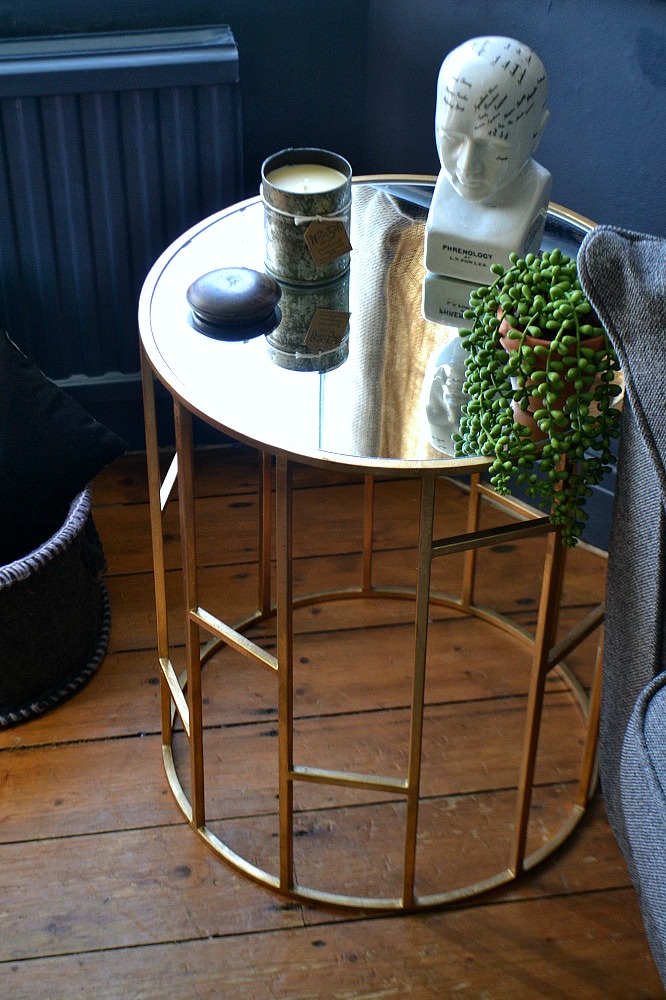
3 Different Ways To Style A Gold Side Table
The Case for Gold Side Tables — and the One Room Where They Fail
Gold side tables work because they create a focal point without a full room overhaul. A single piece in brushed or antique gold tone can anchor a sofa grouping, warm up a cool-toned bedroom, or give a plain entryway something worth noticing.
The honest part most styling content skips: gold is polarizing. Place it wrong and a statement piece becomes a sore thumb.
The one room where gold side tables consistently fail is highly industrial spaces — raw concrete floors, exposed steel shelving, Edison-bulb pendants. Gold reads decorative. Industrial reads utilitarian. They conflict at a fundamental level, and gold rarely wins that argument. A matte black or raw steel alternative is the correct call in those rooms. Everywhere else — living rooms, bedrooms, entryways, reading corners — a gold side table is one of the highest-return styling moves you can make per dollar spent.
The three approaches below match the most common home aesthetics. Each one includes specific items that work, not vague suggestions about adding warmth.
Style 1: Maximalist Glam — Layering Texture Without Tipping Into Excess
Maximalist glam is the style most people picture first when they think gold side table. Velvet sofas. Sculptural lamps. Rich jewel tones. Done well, it looks editorial. Done wrong, it looks like a hotel lobby that ran out of budget oversight. The difference comes down to restraint in the right places.
Commit to a Warm Color Palette Before You Add a Single Accessory
Gold is a warm metal. Pair it with cool tones — icy grey, stark white, electric blue — and it looks jarring rather than luxurious. For glam styling to land, your base palette needs at least one warm anchor: deep teal, forest green, burgundy, camel, or cream.
The West Elm Terrace Side Table in Antique Brass (around $299) is a useful benchmark here. Its warm brass finish sits naturally against velvet seating in jewel tones. Place it beside a deep emerald sofa with a cream area rug and the combination works immediately, no overthinking required.
Start with the sofa or rug. Then choose a gold finish that echoes warmth already established in the room. Reversing that order is where most people get into trouble.
The Right Surface Accessories for a Glam Setup
Glam styling layers objects at different heights. On a gold side table, that means a sculptural lamp with a linen or velvet shade — the Uttermost Couture Table Lamp (around $180) has a gold-leaf base that coordinates without being identical to the table finish, which prevents the setup from looking like it came as a matched set. Add one oversized statement object: a marble candleholder, an art glass vase, or a large ceramic bowl. Then one small organic element — a single stem in a bud vase, a small succulent, a geode.
Three items maximum on the surface. Glam is rich, not cluttered. The moment you add a fourth object, the setup tips into visual chaos.
What Not to Put on a Glam Gold Table
Avoid matte black accessories. They don’t soften gold — they compete with it. Also avoid anything rustic: raw wood bowls, terracotta pots with hand-textured surfaces, jute. Those belong in Style 3 below.
The CB2 Alchemy Side Table ($329, polished gold) is a strong alternative to the West Elm pick. Its geometric base adds architectural interest that suits the glam aesthetic without requiring heavy accessorizing on the surface. Either table works. Pick based on whether your room leans warmer (antique brass) or more contemporary (polished gold).
Style 2: Warm Minimalism — Gold as the Statement, Not the Background Noise
The instinct is to think gold is too bold for a minimal room. That instinct is wrong. In a restrained space, a single gold side table has more impact — not less. This approach works specifically when your room palette is neutral (warm white, oatmeal, sand, soft greige), your furniture is low-profile, and you want one clear visual moment in the space rather than a layer cake of decor.
The Rule of One for Minimalist Gold Styling
In a minimalist setup, the gold table is the statement. Everything on and around it stays deliberately quiet. Four steps:
- Choose a table with clean lines. The Article Nera Side Table in gold (around $149) is a simple disc-top design with tapered legs — unfussy silhouette, exactly what minimalism needs.
- Put one item on the surface. One. A small stack of books (three maximum), a single ceramic mug, or a low vase with dried pampas grass.
- Keep the floor around the table clear. No trailing plants beside it, no stacked magazines.
- Let the finish do the work. In a minimal room, the metallic sheen of a brushed gold finish creates visual interest that a hundred accessories couldn’t replicate.
The Modway Lippa Side Table ($89) is the budget-range option in this category. Its tulip base design reads as timeless and works cleanly in Scandinavian-influenced spaces where form consistently beats ornament.
Color and Material Pairing for Warm Minimalism
The most reliable combination: warm white walls, natural linen upholstery, a bleached oak or light walnut floor, one gold table. That setup photographs well and reads as intentional rather than sparse.
Add a low-pile wool rug in cream or sand under the seating group. The Loloi Pala Collection in natural/ivory runs around $200 for a 5×7 and provides the right texture contrast against a shiny gold finish — enough visual interest to keep the room from feeling sterile, without competing with the table as the focal point.
Style 3: Bohemian Earthiness — Gold Meets Natural Texture
The most forgiving approach of the three, and the one that works across the widest range of rooms. Bohemian styling pairs gold with organic, handmade, natural-texture elements. The warmth of the metal reads as earthy rather than glamorous when surrounded by the right materials.
Think rattan chairs, woven wall hangings, terracotta pots, linen throws, trailing pothos. In this context, gold acts as a warm highlight rather than a dominant focal point — it’s present but it doesn’t announce itself.
Textiles That Ground a Gold Table in a Boho Space
A Beni Ourain-style wool rug is the single best foundation for this look. The cream-and-black geometric patterns add floor-level interest while the wool texture contrasts directly against a shiny or brushed gold finish. Options range from around $150 (mass-market versions at H&M Home) to $800 or more for authentic Moroccan-woven rugs. Either works — the texture is what matters, not the provenance.
Layer a throw over the sofa arm. The Anthropologie Cozy Textured Throw in warm sand or rust ($98) adds exactly the tactile richness that makes a boho space feel lived-in rather than staged. That warmth carries across to the gold table and makes the metal read as part of the room rather than an import from a different aesthetic entirely.
Plants and Organic Objects on the Table Surface
Boho styling is the one context where a trailing plant on a side table actually earns its place. A small pothos or tradescantia in a handmade terracotta pot — H&M Home sells a set of three for around $20 — adds life to the surface without the rigidity of a lamp-and-vase setup.
A hand-poured candle in a warm scent finishes the surface. Paddywax’s Cypress and Fir candle in a recycled glass vessel ($24) sits well proportionally on most standard-diameter side tables and adds another organic texture layer.
Skip the traditional table lamp in a boho setup. A hanging pendant or floor lamp positioned beside the table keeps the surface free for organic objects and prevents the arrangement from tipping into decorator-showroom territory. That distinction — warm and collected versus styled and stiff — is what separates genuinely good boho rooms from imitations.
Accessories That Pair Well With Gold Across All Three Styles
Some items work beside a gold side table regardless of aesthetic direction. The breakdown below covers the most useful accessory categories with specific guidance on what to choose and what to avoid.
| Accessory Type | Best Material | Price Range | Works With | Avoid |
|---|---|---|---|---|
| Vase | Ceramic or art glass | $18–$80 | All three styles | Chrome or stainless steel |
| Table lamp | Ceramic base, linen shade | $60–$250 | Glam, minimalist | Boho setups (use floor lamp instead) |
| Candle holder | Marble, concrete, or glass | $15–$60 | All three styles | Shiny chrome holders |
| Tray | Velvet, rattan, or lacquered wood | $20–$75 | Glam, boho | Clear acrylic (reads too cold beside gold) |
| Books | Hardcover, neutral or warm spine colors | $15–$40 each | All three styles | Paperbacks with busy cover art |
| Small plant | Terracotta or ceramic pot | $10–$40 including plant | Boho, minimalist | Plastic nursery pots left unpotted |
One pattern repeats across all three styling approaches: clear acrylic and chrome accessories consistently underperform beside gold. Both read as cool-toned and create a visual clash with gold’s inherent warmth. A ceramic vase from ZARA Home’s seasonal collections ($25–$45) or H&M Home’s ribbed glass line ($18–$30) will outperform more expensive chrome alternatives in every styling context on this list.
The single best cross-style investment is a linen-shade lamp with a warm bulb. A 2700K bulb temperature reads as warm and candlelike, which flatters a gold finish far more than a cooler 4000K daylight bulb. That’s a $6 fix that changes how every gold piece in the room reads after dark.
Mistakes That Make a Gold Side Table Look Cheap
Gold as a finish exposes poor decisions more visibly than most metals. Three questions worth working through before locking in a setup.
Does Too Much Gold in One Room Kill the Effect?
Yes. Consistently. A gold side table works because it’s a contrast element. When you add a gold floor lamp, gold picture frames, gold cabinet hardware, gold curtain rods, and a gold side table in the same room, none of them stand out — they collectively become visual noise.
Limit gold to two or three distinct points in any one room. The side table plus one lamp plus one framed mirror is the practical maximum. Beyond that, the effect dilutes rapidly and the room starts to feel like a showroom catalogue rather than a home.
Does the Finish Type Actually Matter?
Significantly. There are three main finishes in this category:
- Polished gold — high shine, fully reflective. Most glamorous. Shows fingerprints and scratches clearly. Best suited for glam styling where the table gets light use.
- Brushed gold — matte sheen, less reflective. The most versatile across all three styles and the most forgiving to maintain.
- Antique brass or aged gold — warm, slightly darkened, patinated. Best for boho and maximalist spaces. Looks tonally wrong in ultra-minimal or contemporary rooms.
Matching the exact gold finish across multiple pieces in a room is nearly impossible unless everything ships from the same product collection. Don’t try to match exactly. Instead, mix finishes on purpose — a polished gold table paired with brushed gold lamp fixtures reads as curated. Accidental mismatches read as errors. The intent is what registers.
Is a Sub-$60 Gold Table Worth Buying?
Generally not. At that price point, most gold side tables use a gold-colored paint or powder coat over iron or MDF. Those finishes chip and scratch within a year of regular use. The finish also tends toward a brighter, more artificial yellow-gold tone that reads as costume jewelry rather than hardware.
The practical sweet spot is $100–$200. Tables in that range typically use electroplated or lacquered finishes that hold up under daily use. IKEA’s VITTSJÖ line in gold-tone is a reasonable exception at around $60 — the frame construction is solid enough for a side table’s light-duty load, and the finish is more restrained than most budget competitors.
Picking the Right Gold Side Table Shape for Your Room
Round tops are almost always the correct call — and that’s a clear position worth defending, not hedging around.
Round tables leave more floor space visually open, eliminate corner-collision issues, and work across style categories more naturally than rectangular alternatives. A rectangular gold side table requires deliberate placement to avoid looking like a displaced coffee table piece shoved beside a sofa.
For smaller rooms under 150 square feet, keep the table diameter to 16 inches or less and the height within 2 inches of the sofa arm. Standard sofa arm height sits between 24–26 inches from the floor — a table between 22–28 inches tall allows comfortable reach without requiring you to crane or stretch.
For larger rooms and sectionals, a 20–24 inch diameter top allows for more surface styling without crowding. The Pottery Barn Madeleine Side Table in antique gold (around $399) sits at 24 inches tall with a 22-inch top — proportionally suited to larger seating groups where a smaller table would look undersized and afterthought-ish.
A nesting pair is worth considering if you have the budget. Two gold side tables — one slightly smaller and lower than the other — give you flexibility in arrangement and solve the surface-crowding problem by letting you separate a lamp and a plant rather than competing for the same 16-inch circle. CB2 sells nesting pairs in their gold collection starting around $450 for the set, which works out to significantly better value than two separately sourced tables that may not coordinate in finish or proportion.
As gold tones continue shifting away from ultra-shiny toward warmer brass and aged finishes, a brushed or antique finish table represents the more durable styling investment — one that won’t look dated in three years when the high-polish gold moment moves on.