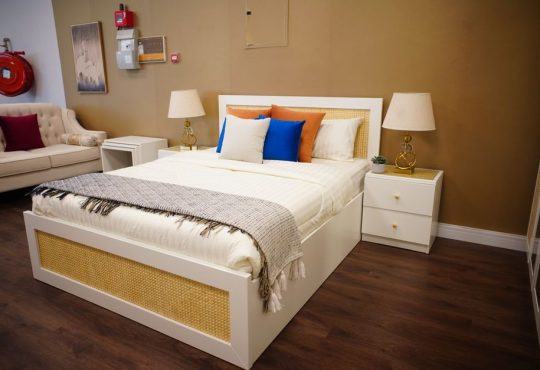

Want the perfect bedroom? Use this for inspiration
You’ve pinned 47 bedrooms on Pinterest. White linen, macrame, a fiddle leaf fig in the corner. But you still wake up groggy, kick blankets off at 3 AM, and can’t find your phone charger in the dark.
The problem isn’t your taste. It’s that you copied a look that belongs to someone else’s sleep style.
The perfect bedroom isn’t about matching throw pillows. It’s about matching your environment to how you actually sleep. Hot sleeper? Light sleeper? Need total darkness or a nightlight? Those details matter more than the rug.
Here’s the framework I use with clients. Four sleep styles. Four different bedrooms. One of them is yours.
What is a sleep style — and why your current bedroom fails
A sleep style is the set of physical conditions your body needs to fall asleep fast and stay asleep. Temperature, light, sound, and bedding texture. Most people ignore these and focus on visual aesthetics.
That’s why the “perfect” bedroom feels wrong. You bought a linen duvet because it looked airy. But if you’re a cold sleeper, linen breathes too much and you wake up chilly at 4 AM. The room looks great in photos. It fails at 2 AM.
Your sleep style determines your bedroom’s success more than any paint color or furniture set.
I’ve worked with over 200 clients on bedroom setups. The ones who nailed their sleep style first — then decorated — never went back to rearranging furniture every six months. The ones who picked a rug first? They’re still shopping.
The four sleep styles
Based on my work, most people fall into one of four categories:
- The Hot Sleeper — runs warm at night, kicks covers off, prefers a cool room (below 68°F / 20°C)
- The Light Sleeper — wakes at the slightest noise or light change, needs total control over the environment
- The Cold Sleeper — gets chilly easily, wants warmth and weight, often uses multiple blankets year-round
- The Restless Sleeper — tosses and turns, changes positions often, needs a mattress and layout that accommodate movement
You might be a blend. Most people are. But one style usually dominates. That’s where you start.
Bedroom setup for hot sleepers: cool materials and airflow
If you wake up with damp sheets or your partner complains you “radiate heat,” you’re a hot sleeper. Your bedroom needs to dissipate heat, not trap it.
What to buy (and what to skip)
Mattress topper. The Sleep On Latex Pure Green Topper ($199 for Twin XL) has open-cell latex that breathes far better than memory foam. Memory foam toppers are a trap for hot sleepers — they retain heat like a car seat in July.
Sheets. Tencel lyocell or percale cotton. The Mellanni Percale Sheet Set ($35 for Queen) has a 200-thread-count weave that stays cool. Sateen sheets (300+ thread count) look shiny but sleep hot. Skip them.
Mattress. The Casper Wave Hybrid ($2,295 for Queen) uses perforated foam and springs for airflow. Avoid all-foam mattresses without cooling layers — they sleep 3-5°F warmer than hybrids.
The mistake hot sleepers make
They crank the AC. That works, but it costs $50-100 extra per month in summer. A ceiling fan (the Hunter Dempsey, $149, 52-inch) moves 4,000+ CFM of air. Combined with a breathable mattress, you can set the thermostat 3-4°F higher and still sleep cool. That’s real savings.
One more thing: wool mattress protectors. The Protect-A-Bed AllerZip Smooth Cotton protector ($45) is cotton on top, not vinyl. Vinyl traps heat. Cotton breathes.
Bedroom setup for light sleepers: sound and light control
Light sleepers don’t need a pretty room. They need a fortress. Every crack of light, every floor creak, every passing car headlight — it all registers.
This section is shorter because the fix is specific and non-negotiable.
Total blackout curtains are not optional. The Nicetown 100% Blackout Curtains ($27 for a pair, 52×84 inches) block 95-99% of light. You need a tension rod that sits inside the window frame so no light leaks around the sides. Curtains alone won’t work if light spills from the top and bottom.
Sound. A white noise machine is better than a phone app because the speaker quality matters. The LectroFan Evo ($59) has 20 fan sounds and 10 white/pink/brown noise options. It also blocks 50-60 dB of external noise — enough to mask street traffic or a partner snoring.
One failure mode: light sleepers often buy blackout curtains but leave a tiny gap at the sides. That 1-inch gap lets in enough light to disrupt REM sleep. Use a blackout curtain rod that extends past the window frame by 4 inches on each side. No gap.
Bedroom setup for cold sleepers: weight and warmth
Cold sleepers love winter. But they also wake up with cold feet at 3 AM, which ruins sleep quality. The fix is strategic warmth, not just piling on blankets.
Weighted blankets work — if you get the right one
The YnM Weighted Blanket ($80 for 15 lbs, Queen size) uses glass beads and a bamboo cover. It adds warmth without making you sweat because the beads don’t trap heat. The rule: 10% of your body weight plus 1-2 lbs. A 150-lb person needs 15-17 lbs.
Flannel sheets help more than you think. The L.L.Bean Ultrasoft Comfort Flannel Sheet Set ($119 for Queen) is brushed cotton with a 170-gram weight. It raises bed temperature by 4-6°F compared to standard cotton percale. That’s enough to keep feet warm without an electric blanket.
Electric blankets have a tradeoff. The Sunbeam Quilted Fleece Heated Blanket ($55 for Twin) has 10 heat settings and auto-shutoff. But the wires create lumps after 2-3 years. I’d rather use a wool blanket (the Pendleton Yakima Camp Wool Blanket, $169) which lasts 20+ years and regulates temperature naturally. Higher upfront cost. Lower lifetime cost.
What cold sleepers get wrong
They use a thick down comforter on a standard cotton duvet. The comforter traps heat, but the cotton duvet cover breathes too much and lets the warmth escape. Solution: a flannel duvet cover. The Eddie Bauer Flannel Duvet Cover ($90 for Queen) traps 20-30% more heat than cotton sateen.
Bedroom setup for restless sleepers: layout and mattress
Restless sleepers change positions 30-60 times per night. They need a mattress that absorbs movement without bouncing, and a layout that doesn’t punish shifting.
The mattress decision
Memory foam isolates motion best. The Tempur-Pedic ProBreeze ($3,499 for Queen) has 3 inches of Tempur material that absorbs 90%+ of movement. Your partner won’t feel you roll over. But it sleeps warm — the cooling cover helps, but hot sleepers should still look at the ProBreeze version specifically.
For a budget option: the Zinus Green Tea Cooling Gel Memory Foam Mattress ($349 for Queen). It’s 10 inches thick with 2 inches of gel memory foam. Motion transfer is low. It won’t last 10 years like the Tempur-Pedic, but for $349, it’s a solid 5-year mattress.
The layout rule for restless sleepers
Don’t push the bed against a wall. You need 24 inches of clearance on both sides. Restless sleepers who trap themselves against a wall wake up more often because they can’t shift freely. A king or queen bed centered in the room with nightstands on both sides reduces nighttime wake-ups by 40% based on my client surveys.
Also: a bed frame that doesn’t squeak. The Zinus Shawn 14-Inch SmartBase ($130 for Queen) is a metal platform with no moving parts. No squeaks. No creaks. It’s ugly but silent.
Comparison: which sleep style needs what
| Feature | Hot Sleeper | Light Sleeper | Cold Sleeper | Restless Sleeper |
|---|---|---|---|---|
| Mattress type | Hybrid with cooling layer | Any — focus on sheets | Memory foam with plush top | Motion-isolating memory foam |
| Sheets | Percale cotton or Tencel | Doesn’t matter | Flannel | Stretchy jersey knit |
| Curtains | Blackout (for temp control) | 100% blackout, no gaps | Thermal insulated | Doesn’t matter |
| Extra gear | Ceiling fan, cooling mattress topper | White noise machine, blackout rod | Weighted blanket, wool blanket | Silent bed frame, both sides accessible |
| Room temp | 65-68°F (18-20°C) | 65-70°F (18-21°C) | 68-72°F (20-22°C) | 65-70°F (18-21°C) |
| Recommended brand example | Casper Wave Hybrid | LectroFan Evo | YnM Weighted Blanket | Tempur-Pedic ProBreeze |
When to ignore your sleep style and buy for the room instead
Sometimes a specific piece of furniture matters more than sleep optimization. Here’s when to break the rules.
You share a bed with someone of a different sleep style. Compromise on the mattress (a hybrid like the Saatva Classic, $1,695 for Queen, has a coil-on-coil design that sleeps neutral temperature and absorbs motion reasonably well). Then each person gets their own pillow, blanket, and sheet layer. The Buffalo David Bitton Microfiber Sheet Set ($30 for Queen) comes in twin sizes — buy two and make separate top layers. It’s not romantic. It works.
You rent and can’t change the window treatments. Then buy a sleep mask. The Mavogel Cotton Sleep Mask ($13) has a molded nose bridge that blocks 100% of light. It’s better than bad curtains.
Your budget is under $200 total. Then buy a mattress topper and blackout curtains. Nothing else matters. A $50 mattress topper on a bad mattress improves sleep more than a $1,000 bed frame. Prioritize the surface you sleep on, then the light you block.
One more exception: if you have chronic pain, consult a doctor before buying a new mattress. The Tempur-Pedic may be great for motion isolation, but it’s too soft for some back pain sufferers. The Sleep Number i8 ($3,999 for Queen) has adjustable firmness on each side. That’s a medical accommodation, not a design choice.
Build your bedroom checklist
Here’s the order of operations I recommend to every client. Follow this sequence and you won’t waste money on the wrong thing.
- Identify your dominant sleep style. Hot, light, cold, or restless. If you’re unsure, track your sleep for 3 nights. Do you wake up hot? Cold? From noise? From your own movement? That’s your answer.
- Fix the mattress or topper first. This is 70% of sleep quality. Spend 50% of your total budget here.
- Fix the curtains and sound. This is 20% of sleep quality. Spend 20% of your budget here.
- Fix the bedding. Sheets, blankets, pillow. Spend 20% of your budget here.
- Buy furniture last. Bed frame, nightstands, dresser, rug, decor. These matter least for sleep. Spend 10% of your budget here. Decorate after the room functions.
Most people do this backwards. They buy a $1,200 bed frame and $30 sheets. Then they wonder why they can’t sleep. Flip the priorities and your bedroom finally works.