Keeping a Bedroom Cool in July: Bedding, Curtains & Airflow
The best way to keep a bedroom cool in July is to stop heat before it reaches the bed, then move warm air out after sunset. I would spend money on breathable bedding and properly timed curtains before buying a fancy cooling gadget. A cotton percale sheet set, closed curtains during the hot part of the day and a real cross-breeze solve most summer bedroom problems for far less than an air conditioner.
How to use airflow to cool a bedroom in July
Airflow works because your body loses heat faster when air moves across damp skin. It does not magically lower the room temperature, but it can make a still bedroom feel several degrees more comfortable. The mistake I see most often is running one fan in the corner and expecting it to cool the whole room. A fan needs a job: bring cooler air in, push hot air out or move air across the bed.
Create a cross-breeze after sunset
Open the bedroom window and the window or door on the opposite side of the home when outdoor air becomes cooler than indoor air. Put a box fan in the warmer opening facing outward. That fan removes the heat sitting near the ceiling and pulls cooler air through the bedroom. If you only have one window, place a fan about 2 to 4 feet from it, facing inward for 20 minutes, then turn it outward once the room has cooled. Keep the bedroom door open unless the hallway is hotter.
Use the ceiling fan for people, not empty space
Set the ceiling fan to counterclockwise and medium speed, with the blades pushing air downward. Turn it off when you leave; it cools skin, not furniture or walls. A pedestal fan aimed along the length of the bed usually feels better than one aimed directly at your face. Leave at least 3 feet between the fan and bedding so the air spreads instead of hitting one small patch.
- Flush hot air out before bed with a window fan.
- Close windows when outdoor air becomes warmer than the room.
- Keep electronics, lamps and chargers away from the bedside table; they add small but steady heat.
- Do not block a fan with a curtain, tall plant or storage basket.
Which bedding stays coolest in July?

My clear bedding pick is cotton percale for most people, with a lightweight eucalyptus-filled comforter for anyone who still overheats under a sheet. Percale feels crisp because the weave leaves more room for air than sateen. Linen feels even breezier, but it wrinkles heavily and can feel rough until washed several times. Avoid thick microfiber, dense jersey and heavy all-season duvets. They trap body heat even when the room itself is reasonably cool.
| Bedding option | Specific example | Price or specification | My verdict |
|---|---|---|---|
| Cotton percale sheets | Saatva Percale Sheet Set | Queen listed at $175; crisp cotton percale | Best everyday choice for hot sleepers |
| Eucalyptus comforter | Buffy Breeze Comforter | Listed at $200; TENCEL Lyocell shell and fill; lab-tested Qmax 0.405 W/cm² | Best lightweight cover when a sheet feels too bare |
| Linen bedding | Washed linen duvet cover | Usually costs more than percale and needs frequent smoothing | Best for people who like a dry, textured feel |
| Polyester microfiber | Generic brushed microfiber set | Often under $40, but holds warmth and moisture | Do not buy it for a hot July bedroom |
Layer the bed for fast temperature changes
Use one fitted sheet, one breathable top sheet and a thin cover folded at the foot of the bed. That setup lets you adjust in seconds without kicking a thick duvet onto the floor. Wash sheets weekly in hot weather and dry them completely; damp fabric feels cool at first but turns clammy during the night. A mattress protector also matters. Thick waterproof protectors can block airflow and make a foam mattress feel warmer, so choose a thin cotton-backed version.
Know when cooling bedding is the wrong purchase
Do not buy a $200 comforter if direct sun is heating the room through an uncovered window. Do not buy linen because a product page calls it cooling if you dislike wrinkles and rough texture. Start with percale sheets, test the room for a week and only add a cooling comforter when the bedding itself is the problem. For most bedrooms, that order saves money.
When should you close the curtains in July?
Close the curtains before the sun reaches the glass, not after the room already feels hot. This timing matters more than curtain color or decorative style. The best routine is short and repeatable.
Use this daily curtain schedule
- Before sunrise: Keep curtains closed if the window faces east or southeast. Early sunlight can heat glass before you wake.
- By 8 a.m.: Close curtains on south- and west-facing windows, especially if the room has dark flooring or a large bed near the glass.
- During the afternoon: Keep the curtains shut while the outside temperature climbs. Do not open them just because the sky looks cloudy; hot glass still transfers heat.
- After sunset: Open curtains and windows once the outside air feels cooler than the room. Pair this with outward-facing window-fan airflow.
- Before bed: Close the curtains again if streetlights, humidity or noise make an open window unpleasant.
Cover the glass, not just the wall
Leave enough fabric on each side to overlap the window frame by several inches. Curtains that barely cover the glass let hot strips of sunlight reach the wall and floor. Hang the rod wider than the window and take the curtain close to the ceiling when possible. This improves light control and makes the room look taller without adding clutter. If safety permits, a slightly open window behind a closed curtain can still support airflow, but never let fabric touch a heater or block an emergency exit.
For a sunny bedroom, this curtain routine is more useful than buying darker decor. For a shaded north-facing room, curtains will do little for temperature; spend your effort on airflow and bedding instead.
How to choose bedroom curtains that reduce July heat
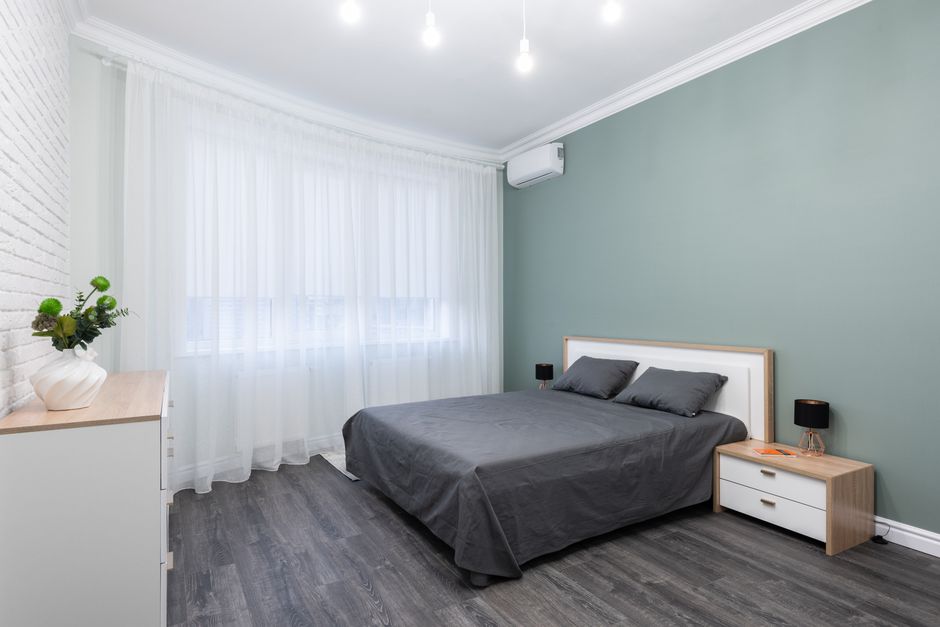
Choose blackout curtains that fit the window properly, then judge them by heat control rather than darkness alone. A dark curtain can still absorb sunlight and warm up if its outer surface faces the glass. A curtain with a light or reflective window-facing side usually makes more sense in a hot room, but no fabric replaces exterior shade. If the window receives direct afternoon sun, my budget pick is the IKEA MAJGULL pair at $49.99 for 57 by 98 inches. It gives solid light control without turning the room into a design project.
Measure before buying anything
Measure the frame width, not the existing curtain. For a fuller look and fewer light gaps, the combined curtain width should be about 1.5 to 2 times the window width. Check the drop as well: a 57 by 98 inch curtain will not cover a tall window, and adding a second short panel does not fix a length problem. If your window is wider or the room gets fierce afternoon sun, the IKEA KORGMOTT pair costs about $69.99 in the 57 by 98 inch size and gives you a heavier blackout option.
Do not confuse blackout with thermal protection
Blackout fabric blocks light. It may reduce radiant heat, but the result depends on the window, curtain fit and sun exposure. The biggest failure mode is leaving a 2-inch gap beside the curtain where sunlight lands on the wall every afternoon. Use side overlap, close the bottom gap where practical and add an exterior shade, awning or blind when the room remains hot. Do not buy expensive curtains for a room that never receives direct sun; that money belongs in a quieter fan or better bedding.
My verdict is simple: for a bright west-facing bedroom, buy well-sized blackout curtains first. For a shaded bedroom, skip the curtain upgrade and fix the air movement.
What bedroom cooling setup works at different budgets?
The best July setup is layered: stop sunlight, sleep under breathable fabric and move air only when the outdoor temperature helps. A single expensive product cannot correct a room with poor timing or trapped heat.
My ranking for three common budgets
| Budget | Setup | Expected result | Who should choose it |
|---|---|---|---|
| Under $50 | Open-window cross-breeze, existing fan, one breathable cotton sheet and curtain timing | Strong improvement when nights cool down | Best first step for almost everyone |
| $50–$220 | IKEA MAJGULL at $49.99 plus Saatva percale sheets at $175 or a similar percale set | Better daytime heat control and less clammy bedding | Best overall value for a sunny bedroom |
| Around $200 | Buffy Breeze Comforter listed at $200 with a percale sheet | Lightweight coverage without a thick polyester duvet | Best for sleepers who need a cover all night |
| About $498 | BedJet 3 Climate Comfort Sleep System, listed at $498 | Direct air-based bed cooling and sweat drying | Best for severe night sweats or rooms that stay hot after sunset |
The final call
Start with curtain timing and airflow because they cost little and address the room itself. For bedding, choose cotton percale; add the Buffy Breeze only if you need a lightweight cover. Buy the BedJet 3 when ordinary fans and breathable sheets still leave you waking sweaty, not because every July night needs a $498 device. That order gives the biggest comfort gain before the biggest bill.