
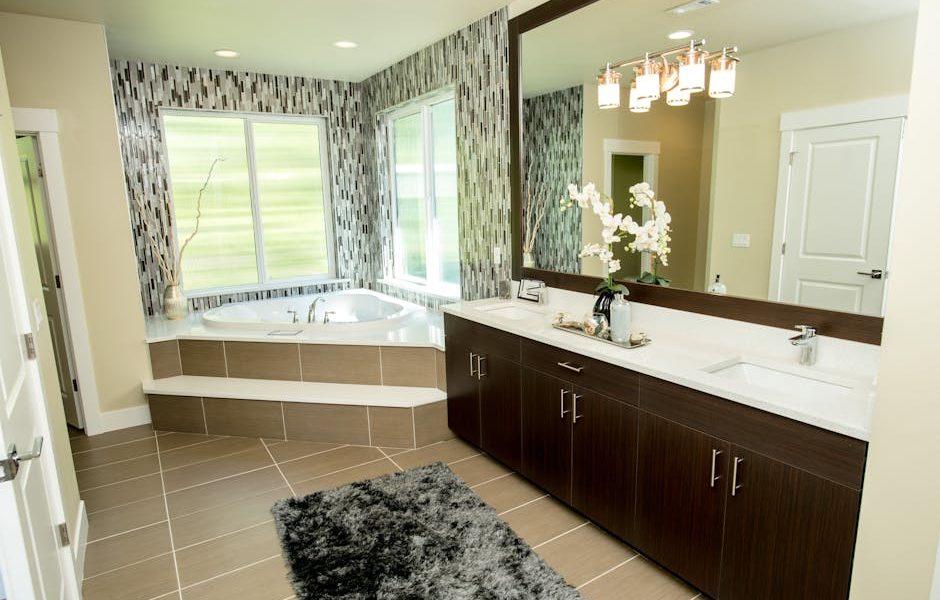
Double Vanity Remodel: What Works, What Doesn’t, and What to Buy
Most people shopping for a double vanity make the same mistake: they size it by style preference, not by room geometry. You pick the 72-inch floating vanity that looks incredible in the showroom, it arrives, and suddenly your bathroom feels like a service corridor with two sinks in it. After going through this process twice — once badly, once right — here’s what actually matters.
The 60-Inch Rule Nobody Mentions
Every renovation guide will tell you 48 inches is the minimum for a double vanity. That’s only technically true. At 48 inches, two sink basins consume most of the counter. Each person ends up with roughly 18–20 inches of actual workspace. If your morning routine involves anything beyond a toothbrush, that’s not enough.
The real usable minimum is 60 inches. At five feet wide, each side gets about 26 inches of clear counter space after accounting for the basin. Enough for a hairdryer, a few products, and a flat iron without everything touching.
Seventy-two inches is the sweet spot if the room supports it. Each person gets a genuinely separate station: different drawers, different mirror sightlines, no sharing. But this is exactly where plans collapse — people decide on 72 inches before measuring, then skip the walkway math entirely.
The Three Clearance Numbers That Make or Break the Plan
Before looking at a single product, measure these in your bathroom:
- Walkway clearance in front of the vanity: 21 inches minimum, 30 inches comfortable. Under 21 and two people can’t stand at the sinks simultaneously without contact.
- Door swing radius: A 21-inch-deep vanity plus an inward-swinging door is a daily collision. Measure the full arc before committing to any width or depth.
- Toilet zone: Building code requires 15 inches from the toilet centerline to any obstacle. Eighteen inches is the difference between functional and annoying.
If your bathroom is under 80 square feet, a 72-inch vanity will dominate it — both visually and practically. Sixty inches is the realistic ceiling. Under 65 square feet, reconsider the double vanity entirely. A wide single with good storage often serves two people better than a cramped double that leaves no room to move through the space.
What Bathroom Square Footage Actually Means Here
An 8×10 bathroom sounds spacious. Subtract the toilet footprint, the shower or tub, and the door swing, and the open floor area drops to 35–40 square feet. Every inch of vanity width affects that proportionally. Plan from the tape measure, not the catalog photo.
Floating vs. Freestanding vs. Built-In: The Honest Trade-Off Table
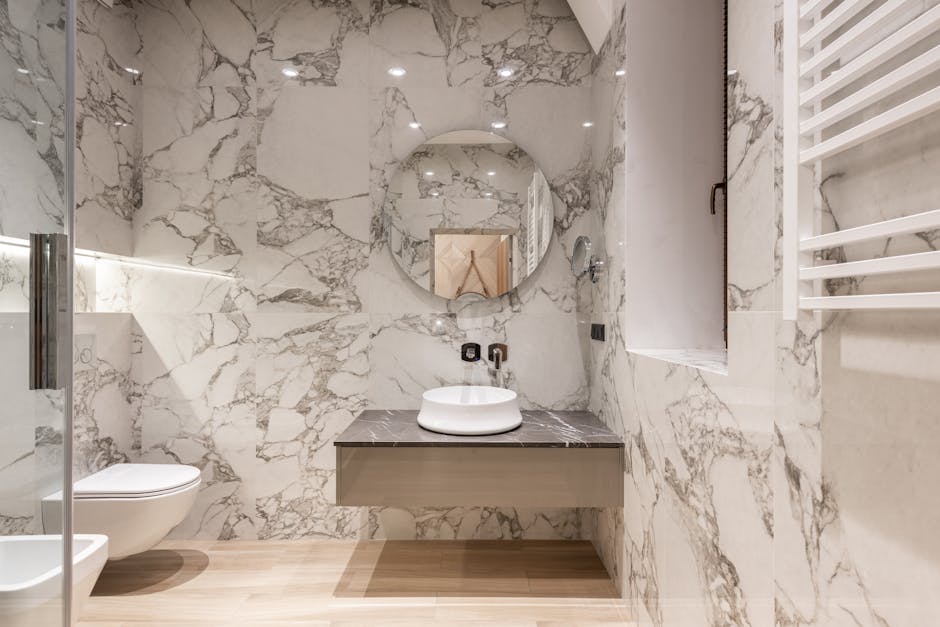
The style you choose affects installation cost, daily cleaning, storage capacity, and how large the room feels at 6am. Here’s the breakdown renovation guides usually soften:
| Vanity Type | Typical Cost (60″) | Wall Blocking Required | Floor Cleaning | Best For |
|---|---|---|---|---|
| Floating/Wall-Hung | $800–$2,500 | Yes — mandatory | Easy, full floor access | Small bathrooms, modern style |
| Freestanding on Legs | $500–$1,800 | No | Harder — legs trap grime | Traditional look, rental installs |
| Furniture-Style Cabinet | $600–$3,000+ | No | Hardest — full base contact | Maximum storage, farmhouse aesthetic |
| Custom Built-In | $3,000–$8,000+ | Yes | Moderate — toe kick gap | Non-standard wall widths |
My pick: floating vanities for anyone doing a full remodel. The open floor they reveal makes a bathroom feel meaningfully larger — you can see tile under the vanity, which reads as space. Mopping takes ten seconds. The wall blocking requirement adds $200–$500 in labor if your walls aren’t already prepped, but that cost pays for itself in daily livability inside a year.
The Fresca Manchester 60″ double vanity ($1,100–$1,400 depending on finish) is the strongest floating option below luxury pricing. Clean transitional style, integrated sinks, solid build. For a real wood veneer upgrade with noticeably better drawer construction, the James Martin Furniture 60″ Chianti in burnished walnut runs $1,900–$2,200. The hardware weight alone tells you it’s a different tier.
Storage That Survives Two People for More Than a Year
The single biggest storage mistake in double vanity planning: counting cabinet doors instead of drawers. Cabinets with shelves are where things disappear. Drawers keep everything visible and reachable. When evaluating any vanity, count the drawers first — then look at everything else.
The layout that actually holds up:
- Six drawers minimum — three per side. Two shallow, one deep. Shallow for daily-use items, deep for tools and bulkier products.
- Separate under-sink cabinets on each side. No shared middle storage. Shared zones become no-man’s-land within a month.
- Soft-close hardware throughout. Not a luxury — it becomes the baseline expectation after about ninety days of daily use.
- A flanking linen tower if space allows. A 12–18″ freestanding tower next to the vanity adds 30–40% more storage without touching the plumbing plan.
The IKEA GODMORGON 47″ double vanity ($400–$650 depending on configuration) gets dismissed by renovation purists, and I get why — the finish quality isn’t Kohler-level. But the drawer setup is genuinely good: six full-extension soft-close drawers across the full width, moisture-resistant construction, and a price point that lets you redirect money toward better countertops or fixtures. For a guest bathroom or a tight budget, it’s the honest choice.
At mid-range, the Virtu USA Caroline 60″ ($1,200–$1,600) is my storage-priority pick. Deep drawers with proper dovetail joints, under-sink cabinets that don’t flex when closed hard. The Home Decorators Collection Claxby 60″ (Home Depot, $599–$699) is the furniture-style alternative — arrives fully assembled and covers traditional aesthetics better than anything else at that price.
Two Mirrors Beat One Wide Mirror Every Time
One large mirror over a double vanity reflects both people simultaneously. That sounds fine until you’re trying to do your hair while your partner is doing theirs and you’re in each other’s sightlines. Two 24×36″ mirrors — one centered over each sink — create psychological separation that genuinely reduces morning friction. Center a single sconce between them at eye level and you’ve solved the lighting problem at the same time.
The Plumbing Cost Nobody Quotes You Upfront
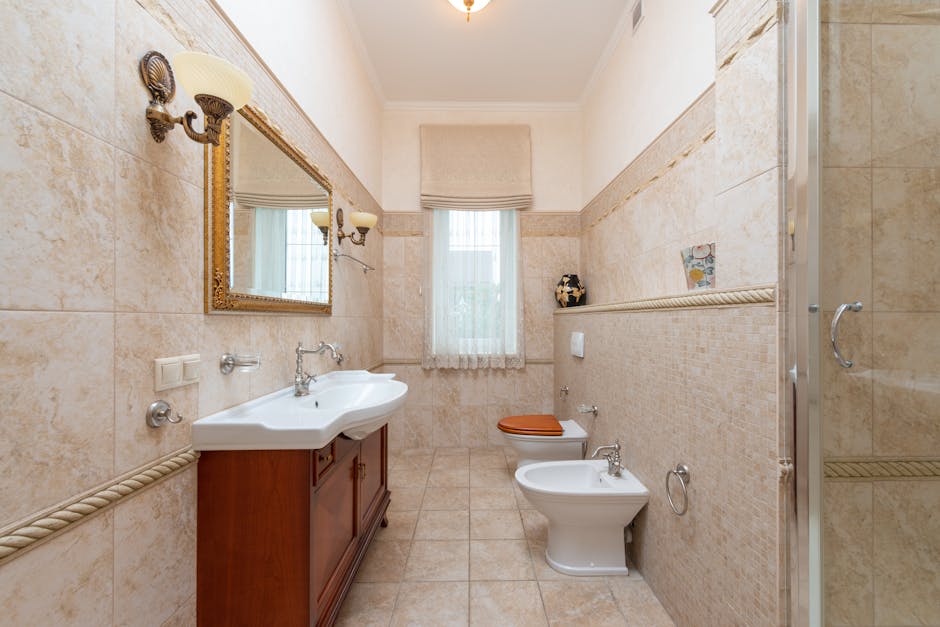
If your bathroom currently has one sink, adding a second drain and supply line typically costs $400–$900 in labor before you buy anything. In older homes with limited access, it runs higher. Get a plumber’s quote before you fall in love with a specific vanity. This step alone has ended more double vanity plans than any other single factor — and it’s almost never mentioned in the content that shows you the pretty before-and-afters.
Which Double Vanity to Buy at Each Budget
Under $700: Is There Anything Worth Buying?
Yes, specifically: the IKEA GODMORGON. At this price tier, most other options use standard particle board that warps in bathroom humidity within two years. IKEA’s moisture-resistant particle board isn’t waterproof, but it holds up substantially better. Pair it with an IKEA ODENSVIK undermount sink ($120–$200) and a basic faucet set, and you have a working double vanity setup for under $1,000 total.
The Home Decorators Collection Claxby 60″ is the only real alternative here for people who want furniture-style aesthetics without IKEA’s assembly requirements. Build quality is average, but it ships fully assembled and has a better range of traditional finishes.
$1,000–$2,000: Where the Quality Jump Is Real
This is where I’d focus most remodel budgets. The Fresca Manchester 60″ ($1,100–$1,400) handles modern and transitional styles well and includes integrated sinks, which eliminates a separate purchase. The Virtu USA Caroline 60″ ($1,200–$1,600) wins on storage configuration. Both are solid choices — pick based on style versus storage priority.
At $1,800–$2,200, the James Martin Furniture 60″ Chianti is a genuine material step up: real wood veneer, dovetail drawer boxes, hardware that doesn’t feel hollow when you open it. If this bathroom is staying as-is for a decade, the extra $600 over the Fresca is defensible.
Over $3,000: What You’re Actually Paying For
Custom sizing and real wood — not just better drawers. Kohler’s Artifacts vanity line starts around $3,200 for a 60″ configuration. Robern produces custom wall-hung units that hit this range. The real value at $3,000+ is precision: if your wall is 57 inches wide, a custom 55-inch vanity fits without awkward gaps or drywall patching. That exactness is what you’re buying, not just upgraded hardware.
When a Double Vanity Is the Wrong Choice
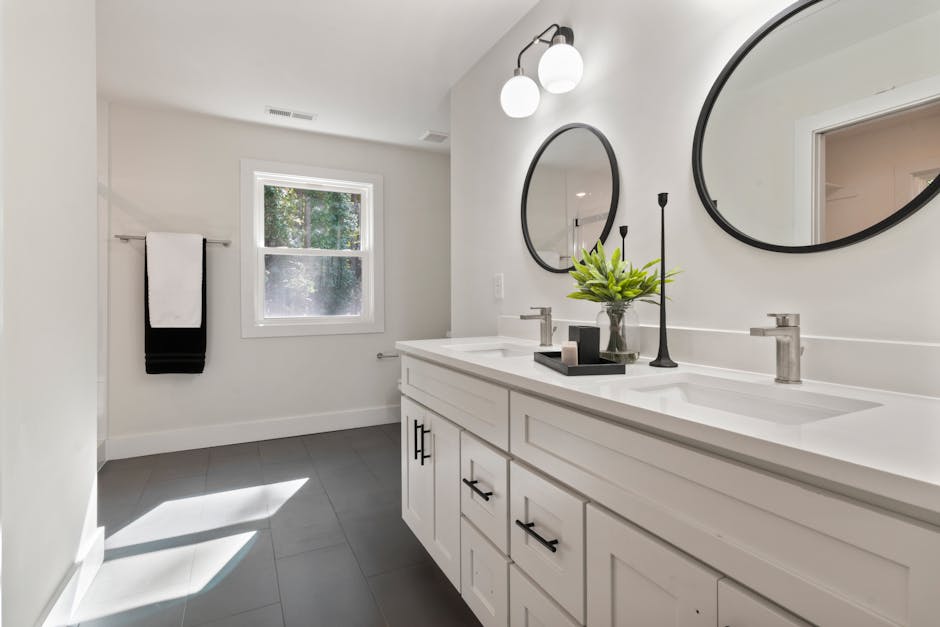
I’ll say it directly: a double vanity is the wrong choice for bathrooms under 60 square feet, bathrooms facing significant plumbing relocation costs, or households where one person uses the bathroom on a completely opposite schedule from the other. If you and your partner genuinely never get ready at the same time, a wide single sink with excellent storage serves you better than a double that eats counter space adding a second basin you’re never using simultaneously.
The upgrade that often wins instead: a 42–48″ single vanity with a deep drawer stack on both sides and a separate grooming mirror on an adjacent wall. You get more usable counter per person than a 48″ double gives you, better storage per square foot, and significantly lower plumbing cost if the second drain wasn’t already roughed in.
The double vanity became a renovation must-have because it photographs well and signals primary suite upgrade in real estate listings. Those are legitimate benefits if resale is part of the plan. But if you’re renovating for daily function in a tight room, function wins. Don’t install a 60″ double in a bathroom that needs a 36″ single — you’ll spend every morning shuffling sideways past it.
Lighting: The Decision That Changes How the Whole Vanity Reads
A double vanity lit by a single overhead fixture is one of the most common and most fixable bathroom mistakes. Overhead light casts shadow directly onto your face regardless of bulb brightness. The problem isn’t wattage — it’s angle.
The fix: sconces or a dedicated vanity bar at eye level, roughly 60–65 inches from the floor to the center of the fixture. Side lighting eliminates facial shadows completely. Hotels and professional makeup setups are lit this way for exactly this reason.
Bulb Temperature Matters More Than Brightness
Use 3000K bulbs — warm white. Not the blue-white 4000K+ that reads as commercial and makes everyone look slightly unwell. A 3000K bathroom is calming and accurate for color matching. Budget $80–$150 per fixture for something that won’t need replacing in eighteen months. The Progress Lighting P300052 series and the Kichler Mast Collection both land in this range with reliable build quality and widely available replacement parts.
Plan the Electrical Before the Walls Close
If you’re adding sconces where there were none, that rough-in needs to happen before drywall goes back up. Adding new electrical circuits after the walls close costs three to five times more than running them during the remodel. Get your lighting plan finalized before the plumber signs off on rough-in day — not a week later when everything is sealed.
The bathroom I renovated badly had a 72-inch vanity, one overhead light, and just enough walkway clearance to make every morning feel like a logistics problem. The one I got right has a 60-inch floating vanity, a sconce between two separate mirrors, six drawers per side, and a door that opens fully without hitting anything. The difference isn’t the vanity itself. It’s every decision that surrounds it.