Cold Bedrooms and Hot Bathrooms: Portable Temperature Fixes That Work
Cold Bedrooms and Hot Bathrooms: Portable Temperature Fixes That Work
Around 65°F (18.3°C) is the temperature sleep researchers typically cite as optimal for a bedroom — yet surveys consistently show that American home bedrooms run 5 to 8 degrees warmer than that in summer, and far colder than comfortable on winter nights. That gap sounds minor. The sleep disruption it causes is not.
Portable temperature devices have gone from novelty items to genuinely useful tools that solve specific problems fixed HVAC cannot. Cold hands that delay sleep onset, a freezing tile floor at 6 a.m., a stuffy bedroom corner with no ceiling vent — these are precise problems with precise solutions. The challenge is identifying which product actually fits the problem, since the market is flooded with devices that overpromise on runtime, heat output, and durability.
This covers what the specs actually mean, which products deliver on them, where portable devices reach their limits, and when the right answer is a $12 door sweep rather than a $200 heater.
What Your Bedroom Temperature Does to Sleep (And Why HVAC Alone Cannot Fix It)
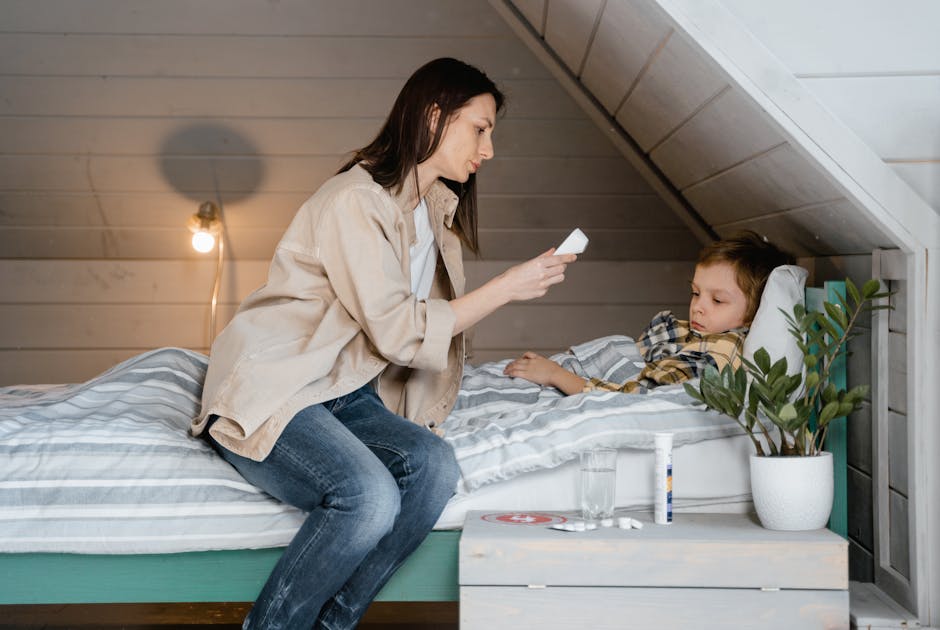
Your core body temperature drops roughly 1 to 2 degrees Fahrenheit as you fall asleep. That drop is not a side effect of sleep — it is a prerequisite for it. When your bedroom is too warm, your body struggles to lose heat fast enough to initiate that cooling, and sleep quality suffers even when you don’t fully wake. Researchers typically describe this as impaired sleep architecture rather than simple discomfort.
Cold extremities create the opposite problem, and it’s less understood. When your hands and feet are cold, peripheral blood vessels constrict to preserve core body heat. In bed, this delays the vasodilation that triggers the core temperature drop that signals your brain to initiate sleep. A 2026 review in Sleep Medicine Reviews found that warming the extremities accelerated sleep onset in participants who typically took over 20 minutes to fall asleep — with effects comparable to some pharmacological interventions, without side effects.
Cold hands at night are not simply uncomfortable. They represent a sleep architecture problem that thermostat adjustments often cannot solve.
Why Thermostats Don’t Solve Personal Temperature Problems
A thermostat controls air temperature at a single measurement point — typically a hallway. Actual temperature at your bed, near the floor, near an exterior wall, or in a poorly insulated room can vary 5 to 12 degrees from the thermostat reading. That is not a malfunction. It’s the inherent limitation of forced-air systems designed for room-level control, not personal-level comfort.
Radiant floor heating addresses part of this at the structural level (covered in the final section). But for renters, those in older construction, and anyone dealing with room-to-room inconsistency, portable solutions fill a genuine gap that central HVAC cannot reach without significant renovation cost.
Why Bathrooms Are the Worst Case
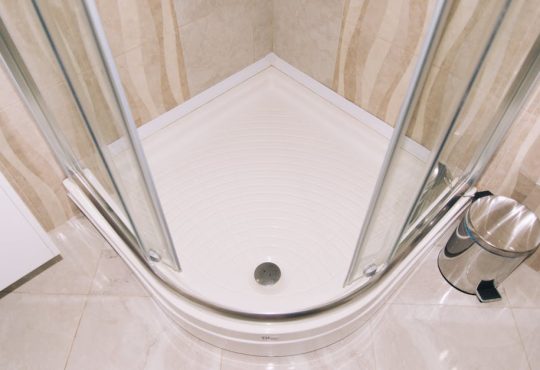
Tile conducts cold roughly 25 times more efficiently than wood. A bathroom at 65°F feels colder than a carpeted bedroom at 60°F simply because tile pulls heat from bare feet faster than air does — this is thermal conductivity, not perception. Small ventilation fans compound the problem by continuously removing warm air, creating a room that heats fast during a shower and drops sharply the moment you step out.
The result is a temperature swing of 10 to 20 degrees within a single bathroom visit. Portable warmers address this more practically than most homeowners expect from a compact device. Any electrical device used in a bathroom should be kept clear of water sources and splash zones; local building codes in most states require GFCI-protected circuits for all bathroom outlets — consult a licensed electrician before adding any fixed heating element to a bathroom, as code requirements vary significantly by jurisdiction.
The Two-Direction Problem That One Thermostat Cannot Handle
Bedrooms need to stay cool for sleep quality and comfortable for waking hours. Bathrooms need to handle cold morning starts and post-shower heat simultaneously. These are not the same problem, which is why the most effective home comfort setups typically pair one device for cold (a hand warmer or radiant mat) with one for warm-air management (a personal fan), rather than attempting to solve both with a single thermostat setting.
Rechargeable Hand Warmers: What the Specs Mean Before You Buy
Battery capacity, heat settings, and dual-function charging are the three numbers that appear on every rechargeable hand warmer listing. Most buyers read them without knowing what they mean in practice, which leads to returns and frustration. Here is what those numbers actually tell you:
| Spec | What It Actually Means | Minimum Worth Buying |
|---|---|---|
| mAh (battery capacity) | Total stored energy — determines runtime at each heat level | 5000mAh for 8+ hours on low setting |
| Heat settings | Surface temperature levels — typically 45°C, 55°C, 65°C | 3 settings minimum for flexibility |
| Power bank output | USB charging output while device is warming hands | 5V/1A minimum to charge modern smartphones |
| Charge time | Time to full recharge via USB or USB-C input | Under 3 hours via USB-C preferred |
| Surface material | Aluminum transfers heat faster and more evenly than plastic shells | Metal housing preferred over polycarbonate |
The 6000mAh AI-Regulated Hand Warmer 2-Pack at $24.99
Most budget hand warmers hold a fixed surface temperature at each setting — meaning they overshoot the target temp, cool slightly, then overshoot again. The 6000mAh rechargeable hand warmer 2-pack with AI smart chip regulation adjusts heat output continuously to maintain consistent surface warmth. For bedroom use — where you might hold the device for 30 to 60 minutes before falling asleep — that consistency matters more than raw maximum heat.
At 3000mAh per unit, runtime at low heat typically lands around 6 to 7 hours per charge. For comparison: HotHands disposable warmers produce roughly 7 hours of heat for $2 to $3 per pair, but they are single-use and cannot function as power banks. The Zippo Hand Warmer (catalytic, refillable lighter fluid) burns hotter and lasts up to 12 hours per fill, but it requires fuel, produces a faint but persistent odor, and is generally unsuitable for enclosed bedroom use.
The two-pack format solves a specific logistics problem: one unit charges via USB-C while the second is in use, maintaining uninterrupted coverage through a full night. Rated 4.5/5 across 1,047 reviews, with most critical feedback directed at the included charging cable rather than the units themselves — a common pattern with this product category.
When to Skip Hand Warmers Entirely
A 3000mAh hand warmer generates roughly 5 to 8 watts of heat output. That warms your palms effectively. It does not raise room temperature by any measurable amount. If the core problem is a cold room rather than cold hands, the correct tools are the De’Longhi TRD40615E oil-filled radiator ($150, 1500W) or the Vornado VHEAT Whole Room Heater ($80, also 1500W) — both of which move heat at 150 to 300 times the wattage of a hand warmer. Using a hand warmer to compensate for a genuinely cold room is the most common category mismatch in portable heating.
The Single Buyer Mistake That Wastes the Most Money
Buying maximum output instead of appropriate output. The Dyson Hot+Cool AM09 is a $600 product that most owners end up running on its lowest setting 90% of the time because high mode is simply overwhelming for a typical bedroom. A $25 hand warmer used correctly, solving the actual problem of cold extremities, delivers better real-world results than a $600 heater running at 10% capacity to compensate for a problem it wasn’t designed to target. Match device output to the specific scale of the problem — not to the magnitude of discomfort.
Personal Fans for Bedrooms: Honest Answers to the Real Questions
Does a personal fan actually cool a room?
No. This is the most widespread misconception in personal comfort products. A fan does not reduce air temperature — it moves air across your skin, which accelerates sweat evaporation, which creates a perceived cooling effect. Room air temperature stays the same or marginally rises, since fan motors generate a small amount of heat.
Above 95°F ambient temperature, a fan can actually make you feel warmer by circulating air that exceeds skin temperature. For bedrooms during summer nights in most U.S. climates, personal fans work best combined with air conditioning: the AC reduces air temperature, the fan distributes cooled air efficiently and lets you raise the thermostat setpoint 3 to 5 degrees without losing comfort — typically reducing AC energy costs meaningfully over a summer.
Why choose a clip-on personal fan over a room fan?
Directional precision and noise. A room fan like the Honeywell HT-900 ($35) moves substantially more total air volume, but a personal fan delivers airflow exactly where you need it — at a workstation, clipped to a nightstand, or mounted on a bed frame — without cooling the entire room or creating white noise that disturbs a sleeping partner.
The personal waist and neck fan with 14,000 RPM brushless motor ($22.99) stands out in this category on one specific spec: 40 hours runtime on low setting. Most clip-on personal fans in this price range offer 8 to 12 hours before requiring a recharge. For overnight use or a full workday, that runtime gap removes the dead-fan-at-3-a.m. problem that makes most budget options impractical for consistent use.
Six speed settings also matter for bedroom environments. Budget fans typically offer 2 to 3 settings, with the lowest still audible enough to disrupt light sleepers. Six levels provide fine-grained control over both airflow and noise. Rated 4.3/5 across 811 reviews, with users consistently noting quiet low-speed operation as a standout feature. The clip-on design handles desk attachment, bed frame mounting, and most standard rails up to 1.5 inches thick.
When should you skip a personal fan?
Two scenarios warrant skipping entirely. First: if humidity is the core problem rather than temperature. A personal fan circulating 80°F air at 75% relative humidity does almost nothing for comfort — the Frigidaire FFAD5033W1 portable dehumidifier ($250) or a window AC unit with active dehumidification mode is the right tool in high-humidity climates. Second: if you have dry eyes or wear daily contact lenses. Directed airflow across the face during sleep reliably worsens both conditions regardless of fan quality or speed setting.
One practical note before mounting any clip-on fan: measure the attachment surface. Most clip mechanisms are rated for surfaces up to 1.5 inches thick. Thick wooden bed rails, padded headboards, or irregular desk edges may require a freestanding alternative like the Vornado FLIPPI V6 ($30) or a desktop version with a weighted base.
Flooring and Bedroom Changes That Fix Temperature at the Source
Portable devices solve immediate comfort problems. They do not address structural ones. If your bedroom or bathroom runs consistently uncomfortable across full seasons, these interventions change the baseline — and several cost less than a single portable heater:
- Area rugs over tile or hardwood: Tile and hardwood conduct cold directly to bare feet through thermal contact. A rug with a minimum 0.5-inch pile adds real insulation at the floor level. The IKEA GASER ($99, 5.6×7.7 ft) and the Ruggable Pixel Shag ($189 for 5×7) are functional choices that require no installation or adhesive. In bathrooms, the Gorilla Grip Original Absorbent Bath Mat ($35) holds up well in high-humidity conditions and makes a measurable difference on cold mornings where tile is the primary discomfort source.
- Electric radiant floor heating mats for bathrooms: Nuheat and Warmup both manufacture electric radiant mats that install under existing tile without full floor replacement. The Nuheat STEP mat ($150 for a 10 sq ft section) runs on standard 120V and costs roughly $0.10 to $0.15 per hour to operate. For anyone spending 10 to 15 minutes per day in a cold bathroom, this is typically more cost-effective over a winter than running a portable space heater daily. Always have a licensed electrician handle installation — electric resistance heating beneath tile involves waterproofing membrane layers that interact with existing floor construction, and errors in this step are expensive to correct.
- Weatherstripping and door sweeps: Residential energy audits consistently identify gaps around doors and windows as accounting for 25% to 40% of conditioned air loss in homes built before 2026. A 3M adhesive door sweep ($12) or V-strip weatherstripping ($15 per window) can reduce a bedroom draft more effectively than a portable heater compensating for the same opening. Fix the source of loss before adding heat generation.
- Thermal curtains: The Nicetown Blackout Curtains ($35 to $60 per pair) reduce solar heat gain in summer and radiant heat loss in winter. In rooms with single-pane windows, properly fitted thermal curtains typically outperform portable heaters at stabilizing overnight temperature because they address heat loss at the boundary rather than compensating for it after the fact.
- Ceiling fan direction by season: Ceiling fans should run counterclockwise in summer (pushing air downward, creating a wind-chill effect at occupant level) and clockwise on the lowest setting in winter (drawing cool air upward and pushing accumulated warm air down along the walls). Most ceiling fans have a direction toggle on the motor housing. It is a free adjustment that most homeowners never make — yet it distributes heat your HVAC system has already generated more effectively than any portable device can.
Structural fixes and portable devices work best as complements. A bedroom with thermal curtains, a weatherstripped door, and a properly insulated floor will stay more comfortable overnight than a poorly sealed room compensated by a $200 space heater. For cold-extremity sleep problems that persist even after addressing insulation and drafts — the one temperature variable structural changes often cannot fully reach — the 6000mAh rechargeable hand warmer set at $24.99 remains the most targeted and cost-effective fix available.
Structural improvements set the floor; targeted portable devices handle the gaps that fixed systems were never designed to close — that layered approach is the single most important principle in bedroom and bathroom temperature management.