
Winter Bedroom Makeover: Layer Bedding, Rugs and Warm Light
Want a bedroom that feels warmer the moment you walk in, without replacing every piece of furniture? Start with three changes: build bedding in layers, cover the cold floor beside the bed, and replace harsh white bulbs with warm light. This winter bedroom makeover takes one room through a practical order of operations, with clear measurements, buying limits, and fixes for the mistakes that make bedrooms feel cluttered instead of cozy.
Why does layered bedding make a bedroom feel warmer?
Cold air is only part of the problem
A bedroom can feel cold even when the thermostat reads 68°F because your body loses heat to cold surfaces. A bare cotton sheet, an uncovered floor, and a bright ceiling light all make the room feel more exposed. Bedding layers solve separate problems: the sheet controls skin comfort, the insulating layer traps air, and the top cover adds weight and visual softness.
The first-principles rule is simple: use several lighter layers instead of one huge blanket. Air between the layers slows heat loss, while separate pieces let you adjust the bed during the night. This works better for couples with different temperature preferences and for rooms that swing between chilly evenings and warm mornings.
Use a three-layer bed
Make the bed with a fitted sheet, a breathable top sheet, and a medium-weight duvet or quilt. Add a folded blanket across the lower third for feet and legs. Choose cotton percale when you run hot, brushed cotton when you want a soft surface, and wool or down when the room stays cold for long periods.
Do not start with the heaviest duvet you can find. A dense comforter can trap too much heat, bunch at the sides, and make washing difficult. The best winter setup is adjustable: remove the blanket, open the duvet, or fold back the top sheet without rebuilding the bed.
How do you layer bedding without overheating?
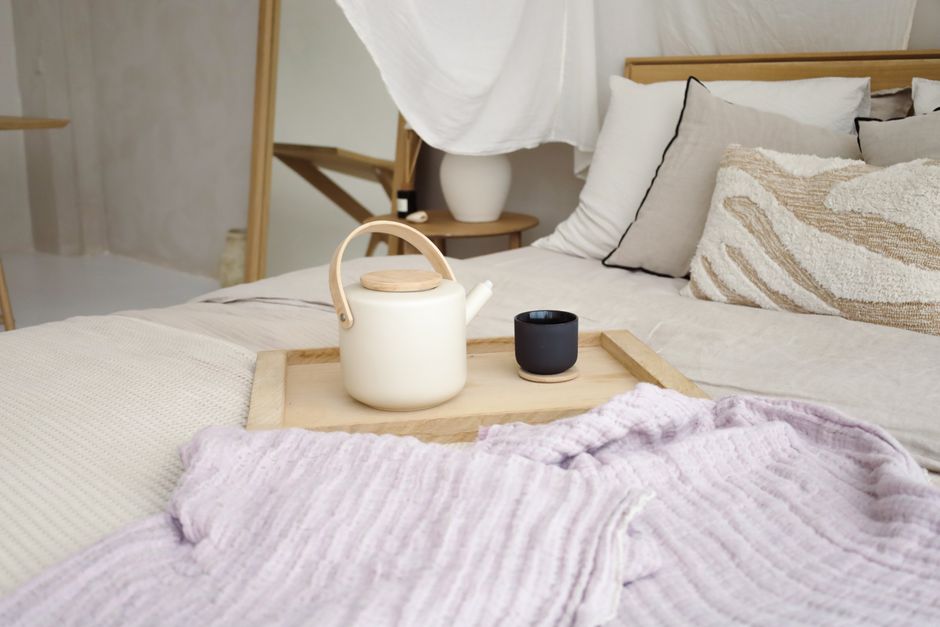
Follow this order from the mattress upward. Each step has a job, so you can stop before the bed becomes bulky.
Step-by-step bedding setup
- Protect the mattress. Use a fitted sheet with a pocket depth that exceeds your mattress height by 2 inches. A 12-inch mattress needs a sheet rated for at least 14 inches so the corners do not pull loose.
- Add a breathable sheet. Choose cotton percale or linen rather than polyester fleece. Percale feels crisp and releases heat; linen costs more but becomes softer after washing.
- Choose one main insulator. The Brooklinen Down Alternative Comforter, listed around $199 for a full/queen, gives a washable synthetic option with less risk of feather leakage. Pick medium warmth instead of heavy warmth for a heated bedroom.
- Add a small top layer. The IKEA VÅRELD bedspread, about $59.99 at 98×98 inches, works as a washable cover that protects the duvet and adds color without adding the weight of another comforter.
- Finish with a foot blanket. Fold a 50×70-inch throw across the foot of the bed. It should be easy to remove, not tucked under the mattress, because trapped feet create overheating and tangled fabric.
Buy for your sleeping temperature
For hot sleepers, use percale sheets, a lightweight duvet, and one cotton blanket. For cold sleepers, use flannel sheets and a medium duvet, then add wool only if the room remains below 64°F. For couples who disagree, use two twin duvets on one king bed. That small change prevents nightly blanket pulling and costs less than changing the room temperature for everyone.
My clear pick for most homes is a breathable sheet, a medium washable comforter, and one removable blanket. It gives you the widest comfort range with the fewest pieces.
What rug size works best beside a winter bedroom bed?
Place the rug to solve a specific problem: cold feet when you stand up, echo from hard flooring, or a bed that looks visually disconnected from the room. A small mat on only one side often looks accidental. Measure the bed and walking path before shopping.
Rug size comparison
| Bed size | Best rug size | Placement | Typical use |
|---|---|---|---|
| Twin | 5×7 feet | Center the rug under the bed with 18–24 inches showing at the foot | Small bedroom or child’s room |
| Full | 6×9 feet | Start below the nightstands and extend past the foot | Balanced coverage without crowding |
| Queen | 8×10 feet | Place the top third under the bed and leave both sides exposed | Best all-around adult bedroom size |
| King | 9×12 feet | Run the rug under the lower two-thirds of the bed | Large rooms with wide walking paths |
Pick warmth, cleaning, and pile height
For a rental or a room with pets, the Ruggable Kamran 5×7 washable rug, commonly listed around $209, is the practical winner because you can lift the cover for cleaning. Its low profile also reduces door clearance problems. Choose a wool rug when softness and insulation matter more than easy washing, but expect higher prices and regular care.
Avoid shag beside the bed if you move furniture often or use a robot vacuum. High pile traps dust, catches chair legs, and hides small objects. A low or medium pile around 0.25 to 0.5 inches gives you warmth underfoot without turning the floor into a maintenance project.
What warm lighting makes a bedroom feel cozier?

The best default setup
Use one ceiling light for cleaning, two bedside lights for reading, and one low lamp or wall light for the evening. Set bulbs between 2200K and 2700K after sunset. The Philips Hue White Ambiance A19, about $44.99 and rated at up to 1100 lumens, is the most flexible pick because it can shift from bright task light to a softer evening setting; set the bedside lamps to roughly 30 percent brightness after 9 p.m.
When to skip smart bulbs
If you dislike apps, buy dimmable warm-white LED bulbs instead and use a physical dimmer, because a complicated lighting routine will not survive a busy week; keep the reading light aimed at the book rather than your eyes, place lamps below eye level when seated, and avoid using one exposed 5000K bulb as the room’s only evening source because its blue-white tone makes the bedding, walls, and skin look flat and the room feel less restful.
Which winter bedroom makeover mistakes should you avoid?
Most disappointing makeovers fail because the room gains objects without gaining comfort. Fix the order, not just the shopping list.
Common mistakes
- Buying the wrong rug first. Measure the bed, door swing, and furniture clearance before choosing a pattern. A beautiful 8×10 rug is useless if it blocks the closet.
- Using too many warm colors. Layer one deep shade, one soft neutral, and one small accent. Rust bedding, orange lamps, and terracotta walls together can make a small room feel heavy.
- Adding a heavy duvet to solve a cold floor. Fix the floor with a rug and draft control instead. More bedding will not stop cold air moving under the door.
- Ignoring lamp glare. A bare bulb at eye level creates discomfort. Use a shade, lower the lamp, or aim the light toward a wall.
- Choosing texture without a care plan. Bouclé, long-pile rugs, and chunky knits collect dust quickly. If you will not vacuum or wash them, choose tightly woven cotton instead.
Quick fixes before buying anything else
Move the bed away from an exterior wall if the layout allows it. Close curtains before sunset, seal a visible door gap with a removable draft stopper, and wash the existing bedding so the room feels fresher. Pull the top blanket down to the foot instead of covering every surface. These changes cost little and reveal which new purchases would actually help.
Do not buy a second comforter until you have slept with the first layer for three nights. Many rooms feel cold because the floor and lighting are wrong, not because the bed lacks fabric.
How can you finish a winter bedroom makeover on a budget?

Spend in the right order
Start with the item that touches your body or feet most often. A clean, comfortable sheet and a rug beside the bed usually improve daily life more than decorative wall art. Next, improve the bedside light, then add one color accent such as a blanket or cushion. This order keeps the room useful even if the project stops halfway through.
Use a simple budget split: 40 percent for bedding, 30 percent for the rug, 20 percent for lighting, and 10 percent for small finishing pieces. For a $300 budget, that means $120 for the bed, $90 for floor coverage, $60 for light, and $30 for storage or decoration. The numbers are flexible, but the order protects the essentials.
Make the room feel finished
Repeat one texture twice, not everywhere. For example, use a woven rug and a woven basket, then keep the bedding smoother. Leave one clear surface on each nightstand for a book, water, or a phone. Keep the path from the bed to the door open at night, because comfort includes moving safely through the room.
Finish by dimming the lights and viewing the room from the doorway. Remove anything that looks useful only in daylight but creates clutter after dark. A winter bedroom makeover works best when its warmth comes from better layers, softer footing, and controlled light rather than a pile of seasonal accessories. As bedroom design moves toward more flexible, year-round rooms, those practical choices will keep working long after winter ends.