
Ceramic Non-Stick Frying Pans: How to Choose One That Actually Lasts
Ceramic Non-Stick Frying Pans: How to Choose One That Actually Lasts
Most ceramic pans fail not because they’re cheap — they fail because buyers pick the wrong size, use the wrong heat, or clean them incorrectly. A $27 ceramic skillet can outperform a $90 Greenpan if you know what you’re buying and how to treat it. This guide covers everything: what separates good ceramic coating from bad, which size to get, how to break in a new pan, and exactly how to clean it without degrading the surface.
Why PFOA-Free Ceramic Coating Actually Matters
Traditional non-stick pans use PTFE — the polymer most people call Teflon. At temperatures above 500°F, PTFE starts breaking down and releasing fumes that are toxic to birds and irritating in enclosed kitchens. PFOA, the chemical once used to manufacture PTFE coatings, has been linked to thyroid disruption and elevated cholesterol in long-term exposure studies. Most manufacturers phased out PFOA by 2013, but the PTFE base layer itself remains standard in conventional non-stick cookware.
Ceramic coating is built differently. It’s derived from silicon dioxide — essentially a sand-derived compound — applied as a sol-gel layer that creates a naturally slick cooking surface without fluoropolymers. No PFAS chemicals, no PTFE, no fluorine anywhere in the manufacturing chain. That’s what “PFOA-free, PTFE-free, PFAS-free” actually means on a product label, and it’s not just marketing language.
Does it matter for everyday cooking? At normal stovetop temperatures under 400°F, a well-maintained PTFE pan won’t put you at real risk. But ceramic removes the concern entirely. For households with pet birds (extremely sensitive to heated PTFE fumes), young children in the kitchen, or anyone who regularly cooks above medium-high heat, the switch to ceramic is straightforward and worth making.
How Ceramic Holds Up Against Greenpan
Greenpan pioneered ceramic non-stick cookware in North America with their Thermolon coating, and products like the Greenpan Paris Pro 10-inch skillet ($75) or the Valencia Pro line are genuinely solid. The engineering behind Thermolon is well-documented and designed for longevity. But it comes with a significant price premium. Verified buyers of the 9.5-inch Ceramic Non-Stick Skillet in Ash Grey ($26.99) compared both directly — one reviewer noted it was “way better anti-stick than Greenspan even” while also being non-toxic. That’s a firsthand comparison from someone who cooked with both pans, and it’s the kind of specific, user-level detail that matters more than brand positioning.
The coating technology in budget ceramic pans improved substantially between 2026 and 2026. The performance gap between a $27 ceramic skillet and a $75 designer brand now mostly reflects brand premium and projected longevity — not cooking performance in the first 12 to 18 months of daily use.
The Honest Limitation Before You Buy
Ceramic coatings don’t last as long as PTFE under heavy use. They’re more sensitive to metal utensils, abrasive cleaners, and thermal shock from moving a hot pan directly under cold running water. One verified buyer described what a degraded ceramic surface looks and acts like: “the non-stick stops working, the pans smoke excessively and even applying a generous amount of cooking oil doesn’t prevent even the simplest over-medium eggs from becoming a sloppy mess.”
That’s not a product defect — it’s a maintenance failure. Every step of that breakdown is preventable with the right habits. The sections below lay out exactly what those habits look like in practice.
8-Inch vs. 9.5-Inch: Which Size Fits Your Actual Cooking
Pan size is the most underestimated purchase decision in cookware. Most people default to the larger option assuming it’s more versatile, then end up with a pan too wide for their burner and too heavy for quick one-egg breakfasts. Here’s the direct comparison:
| Feature | 8-Inch Pan ($20.99) | 9.5-Inch Pan ($26.99) |
|---|---|---|
| Best use | 1–2 eggs, single servings, sauces | 2–3 eggs, proteins, sautéed vegetables |
| Household size | 1 person | 2–3 people |
| Burner fit | Small or medium burners | Medium or large burners |
| Weight | Lighter — easier to flip one-handed | Slightly heavier — more stable on stovetop |
| Storage | Compact — stacks easily | Takes more cabinet or drawer space |
| Color | Beige | Ash Grey |
| Induction compatible | Yes | Yes |
| Oven safe | Yes | Yes |
| Dishwasher safe | Yes (hand wash extends life) | Yes (hand wash extends life) |
Which Size to Actually Buy
If you cook primarily for yourself and eggs are a daily staple, the 8-inch ceramic skillet in Beige at $20.99 is the smarter buy — lighter, cheaper, and sized correctly for a standard small burner. For a household of two, or if you regularly cook chicken breasts, fish fillets, or a full portion of vegetables, the 9.5-inch handles those tasks without crowding the pan surface. One caveat worth knowing: several buyers found the 9.5-inch “smaller than expected.” If you’re feeding three or more people regularly, pair it with a 12-inch stainless steel pan — the Cuisinart 722-30H is a solid $40 option — for larger batches.
A Note on Side Height
Both pans have low sides — a standard skillet design that makes flipping easier but limits liquid capacity. One buyer flagged this directly: “the sides are low, so one can accidentally slide food out of the pan.” For dishes with sauces, braised proteins, or anything involving more than a tablespoon of liquid, a sauté pan with 2.5–3-inch walls is a better tool. These ceramic skillets are optimized for dry or lightly oiled cooking — eggs, sautéed greens, pan-seared fish, stir-fry proteins.
How to Break In a New Ceramic Pan Before You Cook Anything
Ceramic doesn’t require seasoning the way cast iron does. But the first several uses matter more than most people expect. Jumping straight to medium-high heat on the first cook creates thermal stress on a coating that hasn’t yet adapted to your stovetop’s specific heat output. Here’s the exact process:
- Wash and dry completely before first use. Warm soapy water, thorough rinse, clean cloth dry. Residual moisture trapped under heat causes uneven thermal expansion in the coating layer — start clean.
- Preheat on low for 90 seconds with no oil. Let the pan reach temperature gradually. Placing a ceramic pan on high heat immediately — even empty, even once — is the fastest way to damage the coating.
- Add a thin layer of high-smoke-point oil. Half a teaspoon of avocado oil (520°F smoke point) or grapeseed oil (420°F). Spread it evenly across the surface with a folded paper towel before the first cook.
- Cook the first 5–6 uses on medium heat only. This lets the porous ceramic surface settle with the oil layer and adapt to regular heat cycling without stress.
- Use only silicone, wood, or nylon utensils from day one. A single hard metal scrape across the surface creates micro-scratches that accelerate coating failure. This applies to all ceramic pans — not just budget ones.
First Cook: Why Eggs Are the Best Test
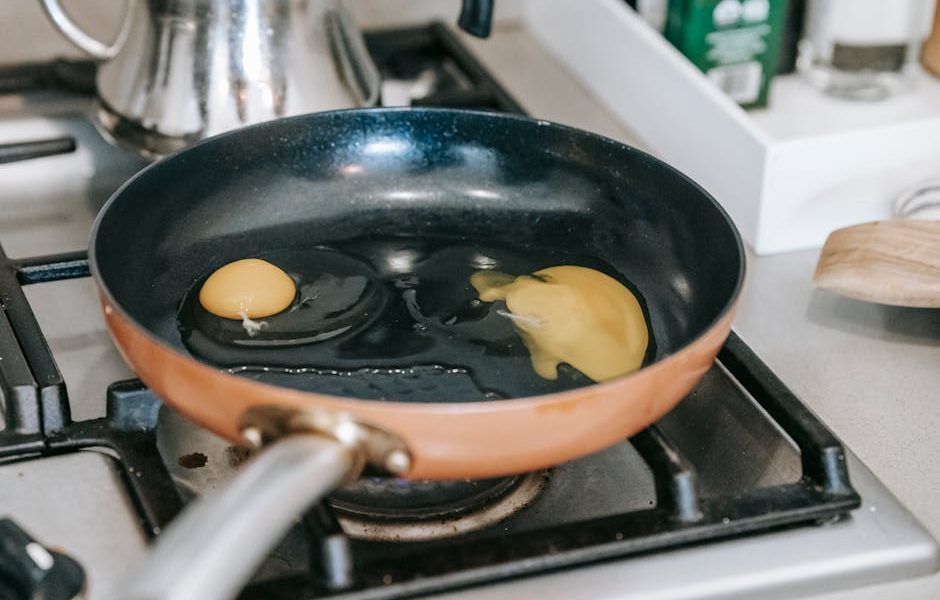
Eggs reveal coating performance immediately. If a cracked egg slides cleanly across the surface after 90 seconds on medium with a half-teaspoon of oil or small pat of butter, the pan is performing correctly. If it sticks on the first use with proper oil and heat, the pan has a manufacturing defect — contact the seller. Most replace first-use defective pans without requiring a return shipment.
One Oil to Avoid Completely
Aerosol cooking sprays — PAM, Crisco spray, any pressurized can — leave behind a sticky polymerized residue on ceramic surfaces that doesn’t wash off with normal cleaning. Over a few weeks of use, this residue bakes into the coating and creates a layer that causes sticking and accelerates degradation. Use liquid oil applied directly from a bottle. For high-heat cooking above 375°F, switch from olive oil to avocado oil — olive oil’s lower smoke point means it burns quickly and contributes to the same residue problem.
The Fastest Way to Destroy a Ceramic Pan
High heat. Not metal utensils. Not dishwasher cycles. Sustained high heat is the primary cause of ceramic coating failure, and it’s the one most home cooks underestimate. Running a stovetop burner on full blast concentrates heat unevenly across the pan surface, creating localized hot spots that degrade the silicon dioxide layer from the inside out. Ceramic coatings are rated for oven use up to 400–450°F, but gas or induction burners on high can exceed 600°F at the contact point. Medium heat handles eggs, fish, chicken breasts, and most vegetables without issue. For true searing temperatures — steak with a hard crust, high-heat wok cooking — a carbon steel pan like the Matfer Bourgeat 062005 or a Lodge cast iron skillet is the correct tool. Ceramic non-stick and sustained high heat are a bad combination from the start.
How to Clean a Ceramic Pan Without Wrecking the Surface
Ceramic non-stick is genuinely low-maintenance — “food doesn’t stick and it’s very easy to clean. Heats evenly and feels lightweight but sturdy,” as one verified buyer summarized after extended regular use. The coating that makes food release so effortlessly is also what makes cleanup simple. But the cleaning method you use determines how long that performance holds.
Can You Put a Ceramic Pan in the Dishwasher?
Both the 8-inch and 9.5-inch models are listed as dishwasher safe. That’s technically accurate. But standard dishwasher detergent runs at pH 10–12 — highly alkaline — and the high-temperature drying cycle adds thermal stress to the coating with every single wash. After 50–100 dishwasher cycles, coating degradation is measurably accelerated compared to hand-washed pans. Hand washing takes 45 seconds: warm water, soft sponge, standard dish soap. That’s the entire process. It’s worth it.
What to Do When Food Gets Stuck
Don’t scrub. Fill the pan with warm water and a drop of dish soap, let it soak for 10 minutes, then wipe clean with a soft sponge. For stubborn burned-on residue, mix baking soda and water into a thin paste, apply gently with a soft cloth, let it sit 5 minutes, then rinse. Never use steel wool, Scotch-Brite heavy-duty pads, powdered cleansers like Comet, or Bar Keepers Friend on ceramic surfaces — any of these strip the coating faster than high heat.
Should You Oil the Pan After Every Wash?
After drying, apply one drop of cooking oil and spread it across the surface with a paper towel before storing. This maintains a micro-layer of fat in the ceramic’s pores that keeps non-stick performance consistent over time. It takes five seconds. Pans that get this treatment after each wash noticeably outperform ones that don’t — not dramatically at first, but the difference becomes obvious at the 6-to-9-month mark when you’re trying to cook eggs without any fuss.
When to Replace Your Ceramic Pan — and What to Expect Over Time
Every ceramic pan has a lifespan. The coating doesn’t fail suddenly — it degrades in a predictable progression. Knowing what to watch for helps you distinguish a fixable maintenance issue from a pan that’s genuinely done.
Visible Signs the Coating Is Breaking Down
- Dark discoloration: Brownish or gray patches baked into the surface. Usually polymerized oil that wasn’t cleaned off promptly after cooking at medium-high heat.
- Visible surface scratches: Fine lines running across the coating where the base metal is becoming exposed. Once visible, the non-stick performance in those areas is permanently gone.
- Pitting: Small craters caused by thermal shock — typically from running a hot pan under cold water immediately after cooking. Always let ceramic cool before washing.
- Rough texture: Run a clean, dry fingertip across the surface. A healthy ceramic coating feels smooth and slightly slick. A degraded one feels rough — faintly like fine sandpaper.
Performance Signs That Mean It’s Time
- Eggs require more than a half-teaspoon of oil to release cleanly
- One consistent spot sticks regardless of how much oil you use (localized hotspot damage)
- The pan smokes at medium heat with a clean, dry surface
- Food partially releases but tears instead of sliding — the coating is failing unevenly
Realistic Lifespan and What Spending More Actually Buys You
With daily use and proper care, expect 1–2 years from a ceramic pan in the $20–$30 range. Higher-end options like the Swiss Diamond XD Classic 10-inch ($95) or GreenLife Soft Grip 12-inch ($45) claim extended durability and longer coating life. In practice, independent testing and verified buyer reviews don’t show dramatically longer performance under real daily cooking conditions — the Thermolon coating in Greenpan products does hold up marginally better, but at 2–3x the price for roughly 20–30% more lifespan, the math rarely works in favor of the premium option.
At $26.99 for the 9.5-inch skillet, the arithmetic is clear. Even if it lasts just 18 months with daily cooking, that’s under $1.50 per month for a pan that multiple buyers confirmed “heats evenly and feels lightweight but sturdy.” When the coating does wear out, replacement doesn’t require second-guessing. The 9.5-inch Ash Grey ceramic skillet is the right pick for most households — versatile enough for daily use, light enough to handle one-handed, and priced well below the threshold where replacement feels like a financial decision. Treat it correctly — medium heat, no aerosol sprays, hand wash — and it will perform exactly as advertised for the better part of two years.