Cotsoco Foot Massager vs Massage Gun: Which One Is Worth $60
Cotsoco Foot Massager vs Massage Gun: Which One Is Worth $60
The assumption most buyers bring to this comparison: a foot massager and a massage gun are the same thing shaped differently. Both run on electricity. Both claim to relieve muscle pain. Both sit around $60. The distinction is cosmetic, right?
It isn’t. The underlying mechanism is completely different, and so is the ideal user. Buying the wrong one — based on a product thumbnail or vague marketing copy — is how you end up with a device that sits unused after the third session.
Note: This is not medical advice. If you have a circulatory condition, peripheral neuropathy, or chronic foot pain, consult a healthcare provider before using either device.
How Each Device Actually Works — and Why the Difference Matters
Shiatsu foot massagers apply rotating pressure to multiple zones across both feet simultaneously — arch, heel, ball, and sole. The cotsoco Foot Massager with Heat, priced at $59.99, stacks three separate mechanisms: rotating kneading nodes targeting the underside of the foot, air compression bladders that inflate and deflate rhythmically around the entire foot, and a heating element that warms the unit interior from all sides. You slide your feet in. You press a button. Nothing else is required of you.
That’s passive recovery. Every bit of the work is mechanical.
After a 10-hour nursing or retail shift, “you do nothing” is a meaningful feature in itself — and it’s what separates this device from a massage gun at a conceptual level.
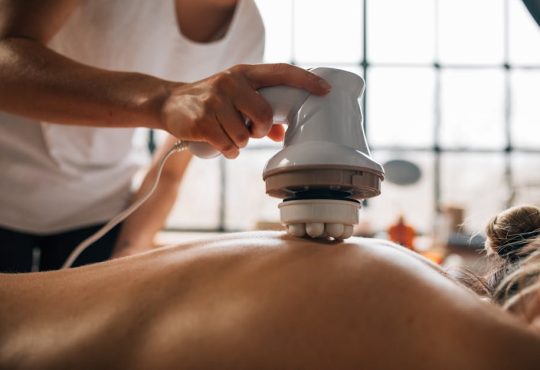
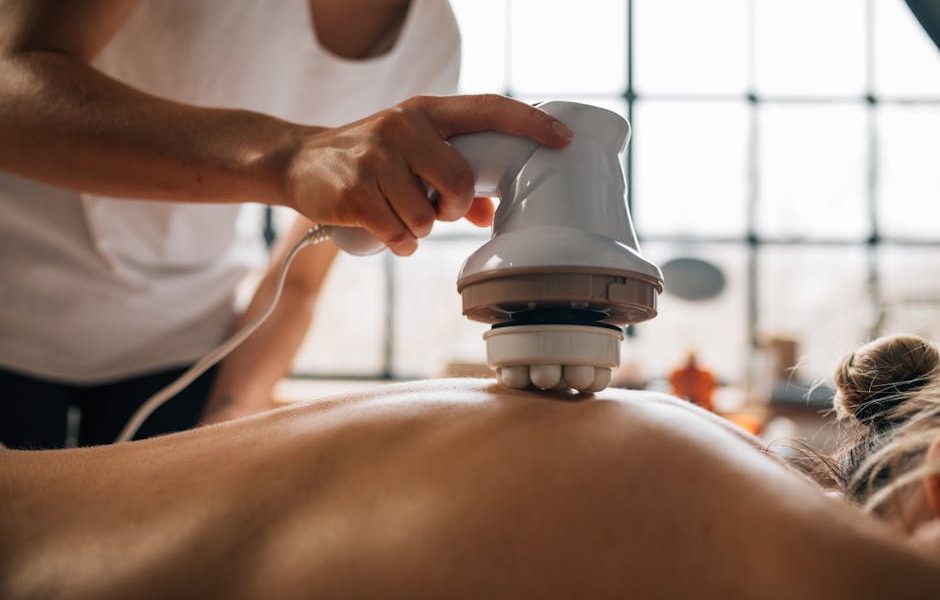
Percussion massage guns operate on a completely different physical principle. A weighted head strikes tissue at high frequency — typically 1,200 to 3,200 percussions per minute depending on intensity — sending vibration deep into muscle fibers to break up tension and increase local circulation. The cotsoco Mini Deep Tissue Massage Gun at $55.99 uses this mechanism with one uncommon addition for the price tier: both heat and cold therapy attachment heads are included. For comparison, the Therabody Theragun Mini runs around $179 and the Hyperice Hypervolt Go 2 sells for approximately $129. The cotsoco competes at roughly one-third those prices.
The practical catch is effort. You hold the percussion gun. You position it. You move it continuously across whatever muscle you’re targeting. That’s fine when you’re treating a post-workout calf with energy to spare. It’s a different ask at 10 p.m. after you’ve been on your feet all day.
What Air Compression Actually Does to the Foot
Air compression is the feature most buyers don’t fully understand before purchasing. The bladders inside the unit inflate slowly, apply consistent external pressure across the full foot for several seconds, then release. This isn’t kneading — it’s closer to the compression sleeve therapy used in clinical settings for circulation and lymphatic drainage.
The benefit is cumulative and somewhat delayed. One reviewer’s husband was skeptical of the device mid-session until “the cycle was finished and he realized how relaxed and unclenched his feet actually were.” That’s the compression mechanism working as designed — the result registers after the session, not always during it. Budget alternatives like the Renpho Foot Massager EMS ($60-$80) and the HoMedics FMS-270 (~$50) include similar compression systems, but the cotsoco’s combination of compression plus simultaneous kneading plus heat is what distinguishes the experience at this price point.
Heat Means Two Different Things Here
Both devices include heat, but the delivery is fundamentally different. The foot massager heats the enclosed interior, surrounding your foot from all sides with ambient warmth — an immersive effect that builds gradually from multiple directions. One buyer noted: “The heat feature is a huge plus because it heats up fast, making the whole experience even more relaxing.” Based on consistent user feedback, noticeable heat arrives within 2-3 minutes of startup.
The massage gun’s heat comes through a specific contact attachment head that touches a single point of skin at a time. That’s better for targeting one tight spot in a calf or hamstring — localized thermal stimulus at precision depth. It’s not surrounding warmth. These serve genuinely different physiological purposes. Don’t expect either device’s heat to replicate what the other does.
Specs Comparison
| Feature | Cotsoco Foot Massager ($59.99) | Cotsoco Mini Massage Gun ($55.99) |
|---|---|---|
| Primary mechanism | Shiatsu kneading nodes + air compression | High-frequency percussion strikes |
| Heat therapy | Yes — ambient interior warming | Yes — localized contact attachment head |
| Cold therapy | No | Yes — cold attachment head included |
| Body coverage | Both feet simultaneously | Full body — user-directed |
| User effort | None — fully passive | Active — must hold and position throughout |
| Auto-off timer | 15 minutes | Not reported in reviews |
| Intensity settings | Multiple — kneading, compression, vibration | Multiple speed levels |
| Remote control | No | N/A — handheld device |
| Verified rating | 4.1/5 from 10 reviews | 4.6/5 from 907 reviews |
| Best use case | Daily foot recovery, passive use | Athletes, full-body muscle work, targeted relief |
The review count disparity in that table is the most important number you should take away from this section. Nine hundred and seven reviews versus ten. The foot massager’s 4.1-star rating is statistically near-meaningless — a sample that small could be produced by random variation in either direction. The massage gun’s 4.6 from 907 is a genuinely informative signal. If social proof factors into your confidence before a purchase, that asymmetry matters significantly.
What Verified Buyers Actually Say
Six separate reviewers named the shiatsu kneading nodes as the foot massager’s defining feature — more specifically, the fact that the nodes cover the arch, heel, and sole simultaneously rather than just running a strip across the bottom of the foot. One verified reviewer wrote: “The rotating massage nodes target pressure points across the soles, heels, and arches, closely mimicking the feel of a professional massage.” That comparison to a professional massage is specific and earned — not the reflexive enthusiasm of someone who bought their first massager.
Multiple intensity settings drew praise for being genuinely useful rather than decorative. The device separates controls for kneading, compression, and vibration, which means sensitive users aren’t forced into the same intensity as people who want deep pressure. The consistent advice from experienced users: start at the lowest setting for every function and increase gradually over multiple sessions. This guidance directly addresses one documented failure case — a buyer who started on maximum settings and ended up with bruised feet after a single session.
Four buyers specifically called out the air compression as better than expected, including skeptics who only understood the value after a full session completed. That pattern — dismissal during use, appreciation after — is consistent with how compression therapy actually works physiologically.
The Real Problems That Showed Up in Use
Two complaints are substantive enough to influence a purchase decision.
Foot size constraints. Several buyers flagged interior tightness for larger feet. This isn’t a defect unique to this unit — it’s a physical limitation shared by the Renpho Foot Massager EMS and HoMedics equivalents at this price tier. If you wear US men’s size 11 or above, verify interior dimensions before committing. If buying as a gift for someone without knowing their foot size, the massage gun avoids this problem entirely since it has no fit constraints.
Squeaking after repeated use. One buyer reported a loud friction noise developing around the 10th use — the massage nodes rubbing against the inner cloth lining. With only 10 reviews, there is no way to determine whether this is an isolated incident, a batch issue, or a systematic design limitation. It’s a known risk with extremely limited data behind it. At $59.99 on a device meant for daily use, that’s a durability uncertainty worth acknowledging before buying.
The 15-Minute Auto-Off Is a Minor Frustration, Not a Dealbreaker
Multiple buyers mentioned the automatic shutoff as an annoyance. The device powers off after 15 minutes and requires a manual restart — no option to extend or disable it. For a focused wind-down session before bed, that’s manageable. For someone planning a 30-minute recovery block, it interrupts the experience twice. The massage gun doesn’t carry this limitation. It’s a real gap, but not a reason to rule out the foot massager if it otherwise suits your needs.
Four Buying Mistakes That Are Completely Avoidable
- Starting at maximum intensity on the first session. This is the most preventable mistake and carries real physical consequences. High-intensity shiatsu on unconditioned foot tissue — or high-speed percussion directly on the Achilles tendon or plantar fascia — can cause bruising or significant next-day soreness. The documented recommendation from multiple users: begin at the lowest setting for every function and work up across several sessions. This applies to both devices equally.
- Skipping the foot size check. Enclosed foot massagers are designed around a standard foot size range. Larger feet can experience genuine discomfort, not just reduced effectiveness. If you’re purchasing as a gift without knowing the recipient’s foot size, or if you wear larger sizes yourself, confirm dimensions with the seller before ordering. The massage gun sidesteps this issue entirely.
- Treating either device as a clinical treatment tool. Neither device treats plantar fasciitis, heel spurs, Achilles tendinopathy, or structural foot conditions. These are consumer-grade recovery and relaxation tools. Using one as a substitute for physical therapy on a diagnosed condition delays appropriate care and is outside the therapeutic scope of either product.
- Over-relying on the foot massager’s current rating. A 4.1-star average from 10 reviews is preliminary data, not a verdict. The true quality average could sit considerably higher or lower — there simply isn’t enough information yet. Use it as a weak signal only. The massage gun’s 907-review average is the reliable data point in this comparison.
Which Device Wins for Your Specific Situation
The foot massager is the right pick for one specific type of person. The massage gun wins for almost everyone else. These aren’t hedged non-answers — the use cases genuinely don’t overlap.
Buy the cotsoco Foot Massager ($59.99) if you work a physical job that keeps you upright and moving for 6 or more hours daily — nurses, retail workers, teachers, warehouse and hospitality staff. For this person, hands-free, both-feet-at-once, passive recovery with heat and compression is exactly the right tool. You’ve been on your feet all day. You don’t want to hold anything or think about positioning. The foot massager asks nothing of you except sitting down, and the shiatsu coverage plus heat combination genuinely delivers on that promise. The cotsoco foot massager is built precisely for this profile — its limitations (feet only, 15-minute timer, no remote) don’t matter to someone who just wants effortless daily foot relief.
Buy the cotsoco Mini Massage Gun for $55.99 if you want one device that handles calves, hamstrings, shoulders, upper back, and feet. Or if you’re an athlete or regular gym-goer who needs targeted post-training muscle work. Or if you want cold therapy in addition to heat — the foot massager offers no cold option at all. The massage gun’s 907-review track record at 4.6 stars also means you’re buying something with proven quality at scale, not placing a bet on a 10-review product. The only genuine trade-off is that you must actively use it, which requires energy you may not always have.
Don’t buy either device if you have peripheral neuropathy, varicose veins, active lower-limb swelling, blood clots, or open skin on the foot or lower leg. Compression and percussion on compromised tissue or circulation can cause real harm. Get medical clearance first.
On the $4 Price Gap
Four dollars. That’s the entire price difference. Do not let it influence your decision. Buying the wrong device and using it twice means you spent $56 or $60 on a dust collector. Optimize entirely for use case fit.
Bottom Line
The cotsoco foot massager delivers genuine passive foot recovery with a combination of shiatsu, heat, and compression that costs $59.99 — but it’s backed by 10 reviews and has documented durability questions. The massage gun has 907 reviews at 4.6 stars, covers your entire body, adds cold therapy, and costs $4 less.
For most buyers, the single most important purchase principle here is this: buy the device that matches your actual energy level you’re trying to recover from.