Cordless Vacuum for Mixed Floors: What Specs Actually Matter
Cordless Vacuum for Mixed Floors: What Specs Actually Matter
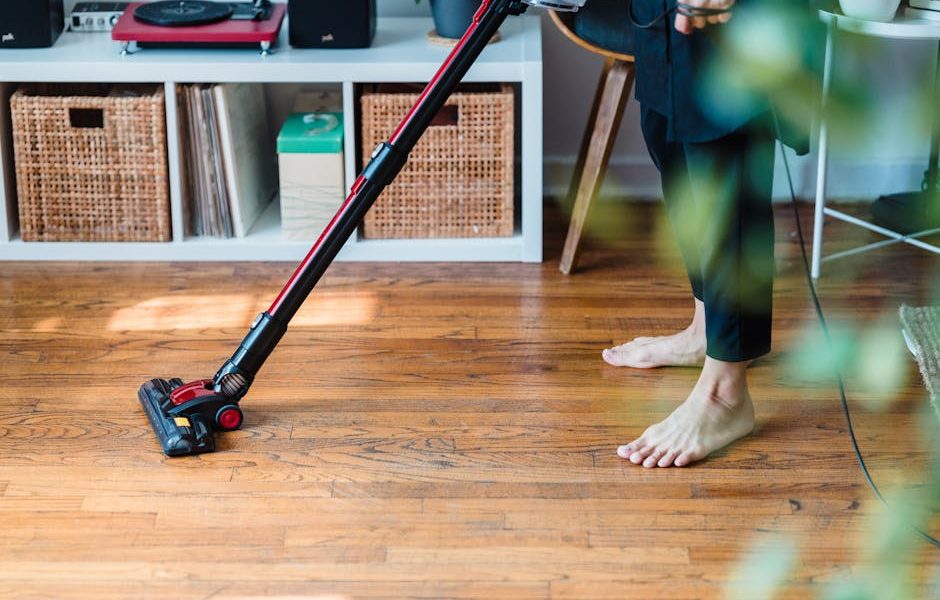
You vacuum the bedroom carpet thoroughly. Then you move to the hallway hardwood and watch fine dust scatter in every direction.
You haven’t done anything wrong. The vacuum has.
Most cordless vacuums are quietly optimized for one floor type. They get marketed as whole-home solutions, sold to people with both carpet and hardwood, and the one-star reviews arrive six months later. This piece breaks down which specs actually predict real-world performance on mixed flooring — and how to avoid machines that compromise on both surfaces simultaneously.
Why Hardwood and Carpet Demand Opposite Things From a Vacuum
The physics are genuinely different, and most product listings skip the explanation entirely.
On carpet, suction needs to work against resistance. Carpet fibers trap dust, pet hair, and debris below their surface layer. Extracting it requires strong airflow pulling against that resistance, combined with a motorized brush roll that physically agitates fibers to release trapped particles. The deeper the pile, the harder this becomes — and the more suction pressure matters.
Hardwood floors flip the equation entirely.
Too much suction on a smooth surface causes the vacuum head to seal against the floor. The machine becomes hard to push, and on softer finishes, the head can leave marks. Worse, the motorized brush roll — essential for carpet — now acts like a tiny broom on hardwood, spinning fast enough to fling fine particles forward rather than drawing them into the suction path. This is the mechanism behind dust clouds appearing on hardwood when you use a carpet-optimized head.
The Brush Roll Problem Most Reviews Don’t Cover
Standard high-RPM brush rolls are designed to dig into carpet fiber. On hard floors, those same bristles scatter lightweight debris — fine dust, pet dander, hair fragments — ahead of the machine instead of capturing it.
The engineering fixes are well established. Dyson addresses this with the V8 Absolute ($349) by including two completely separate floor heads: a motorized carpet head and a soft-roller Fluffy head for hardwood. You swap them per surface. It works, but you’re paying $349 for a 40-minute runtime machine with a 0.54L dustbin and a process that requires remembering to switch attachments.
The alternative approach is an anti-tangle brush design that controls debris direction on contact, handling both surfaces from a single head without the swap. Less elegant in theory, but significantly more convenient in practice for homes where you’re moving between surfaces every few minutes.
Most vacuums in the $100–200 range use a universal head and split the difference. The Shark IZ163H ($149) is the clearest example: adequate on medium-pile carpet, inconsistent on hardwood, and long-term user reviews reflect that once the initial experience fades.
Suction Pressure vs. Airflow: Reading the Numbers Correctly
Manufacturers advertise suction pressure in Pascals (Pa) because large numbers read well on packaging. But Pa measures how hard the vacuum pulls — not how much debris it moves per minute. Airflow, measured in CFM (cubic feet per minute), determines actual pickup performance on surface-level debris.
A vacuum rated at 25,000Pa with a restricted internal path — small dustbin, constricted filter chamber, tight hose diameter — will underperform one rated at 18,000Pa with unrestricted flow. The combination matters more than either metric alone. When a brand publishes only Pa and omits CFM, that omission usually has a reason.
For carpet, you want Pa above 20,000 to reliably lift embedded pet hair. For hardwood maintenance, airflow is the more relevant variable. A vacuum that performs well on both surfaces needs to balance these — which is why spec sheets alone don’t tell the complete story.
What “Self-Standing” Actually Solves
This sounds like a minor convenience feature. It isn’t. Traditional stick vacuums lean against walls (and fall), or require a wall-mounted charging dock with screws and anchors. A self-standing vacuum parks wherever you stop — no wall, no installation, no rental-apartment compromise. For anyone moving between rooms frequently or working around furniture, the difference in real-session usability is substantial.
5 Buying Mistakes That Show Up in One-Star Reviews
These patterns repeat across return and regret reviews for every cordless vacuum brand. They’re predictable enough that you can avoid all of them before purchasing.
- Buying based on advertised runtime, not real-mode runtime. The 60 or 70-minute headline figure typically applies to Eco mode — minimum suction, barely adequate for light surface dust. On High mode, which carpet cleaning actually requires, many vacuums drop to 20–25 minutes of usable runtime. Before committing, find the per-mode runtime breakdown. If the brand only publishes the maximum figure without mode-specific data, assume the worst-case applies to your carpet use.
- Skipping filter maintenance until performance degrades. Washable filters on cordless vacuums need cleaning every 4–6 weeks under normal use, more frequently in pet households. Skip this and suction pressure drops 30–40% within 90 days. Most buyers interpret this as the vacuum deteriorating — when a 10-minute rinse under running water would restore full performance. Vacuums with maintenance reminders built into the display eliminate this failure mode almost entirely.
- Choosing dustbin size for your current household, not your actual one. A 0.44L dustbin works for a single-person apartment with minimal debris. Add a medium-shedding dog and you’re emptying mid-clean every session. For pet owners, 0.75L is the functional minimum. The Shark IZ163H’s 0.44L dustbin is adequate for light use; it’s genuinely inconvenient for anyone with animals.
- Ignoring brush roll construction with pets in the home. Standard brush rolls tangle with pet hair badly and predictably. After 6–8 weeks of regular use with a shedding animal, matted hair wraps around the roll axle, causes motor strain, and degrades pickup efficiency. You end up manually cutting hair off the brush before each session. Anti-tangle brush rolls aren’t a luxury feature for pet owners — they’re a baseline requirement. Buying without one for a pet household is a documented, repeatable failure mode.
- Treating a single-battery vacuum as sufficient for large homes. Even a 70-minute runtime gets thin in a two-story home when you’re deep-cleaning multiple carpeted rooms plus transitional hardwood spaces. Homes over 2,500 square feet need either a vacuum with a swappable second battery or an honest cleaning schedule that builds in recharge time. Buying a single-battery cordless as the sole cleaning solution for a large home is the setup for frustration, not the vacuum’s fault.
A sixth pattern that costs people significantly: buying a cordless stick vacuum expecting upright corded performance on deep-pile carpet. No sub-$300 cordless handles wall-to-wall high-pile carpet as a primary machine. They’re maintenance tools — excellent for daily and weekly upkeep between deep cleans, not replacements for the quarterly deep-carpet session.
How Four Mid-Range Cordless Vacuums Actually Compare
Spec comparisons are most useful when placed side by side against the metrics that predict mixed-floor performance. Here’s how four commonly purchased options stack up:
| Model | Price | Max Runtime | Suction | Dustbin | Anti-Tangle | Self-Standing | Battery Display |
|---|---|---|---|---|---|---|---|
| FEPPO Cordless Stick Vacuum | $129.98 | 70 min | 25,000Pa | 0.8L | Yes | Yes | Touch screen |
| Dyson V8 Absolute | ~$349 | 40 min | 115 AW | 0.54L | No (standard head) | No | LED bar only |
| Shark IZ163H Anti-Allergen | ~$149 | 40 min | Not disclosed | 0.44L | No | No | LED indicator |
| Eufy HomeVac H30 Infinity | ~$179 | 90 min | 16,000Pa | 0.6L | No | No | LED indicator |
The Dyson V8’s 115 air watts is a different measurement unit than Pa, but in practice it delivers strong carpet performance — the engineering quality is real. The problem is the 0.54L dustbin and 40-minute runtime. For a 3-bedroom home with pets, you’re emptying the bin frequently and potentially recharging mid-session. You’re paying $349 for Dyson’s track record, not for the most practical specification set.
The Eufy HomeVac H30 has the longest runtime in this group at 90 minutes. But 16,000Pa won’t reliably pull embedded pet hair from medium-pile carpet. Solid for daily hardwood surface maintenance and light debris; not a complete solution for carpeted rooms with regular foot traffic or animals.
The Shark IZ163H doesn’t publish suction Pa data at all. When a brand omits a core performance spec that competitors publish openly, that omission is information. The IZ163H performs adequately for its price — but “adequately” is doing a lot of work in that sentence.
What the FEPPO’s Specs Mean for Real Cleaning Sessions
The FEPPO is the strongest specification-per-dollar option under $150 for mixed-floor homes right now — not because it’s a perfect vacuum, but because it doesn’t compromise on the three specs where nearly every competitor at this price point fails: runtime, dustbin capacity, and brush roll design.
At $129.98, the FEPPO cordless stick vacuum posts 25,000Pa suction, 70-minute runtime, 0.8L dustbin, anti-tangle brush roll, self-standing design, and a touch screen display. That combination is unusual below $150. The table above makes the gap visible. The reasonable question is: what’s the trade-off at this price? Based on available specs and early review data (31 reviews, 5.0/5), the trade-off is brand history rather than hardware. FEPPO doesn’t have Dyson’s decade of reliability data. If that track record is worth $220 to you, buy the Dyson. If you’re evaluating on what the machine actually does, the FEPPO’s hardware profile competes above its price.
The 70-Minute Runtime in Practice
Seventy minutes on a single charge covers a full 2–3 bedroom clean comfortably. A standard session — living room, two bedrooms, hallway, and kitchen on mixed flooring — runs 35–50 minutes. That fits in one charge with meaningful buffer. You’re not rationing your cleaning route around battery depletion the way you are with a 40-minute machine.
The touch screen changes session planning in a practical way. You start knowing exactly how much runtime remains, not estimating from an LED bar with three states. The display also triggers a filter maintenance alert — which directly prevents the performance degradation described in mistake #2 above. That one feature alone is worth noting for anyone who has bought a vacuum, watched its performance drop mysteriously over three months, and blamed the product rather than the filter.
Anti-Tangle Brush Roll: The Deciding Feature for Pet Owners
For households with dogs or cats, the anti-tangle brush roll is the single most important specification in this vacuum. Medium-to-long coat breed hair — retrievers, huskies, collies, most cats — wraps around standard brush rolls within weeks of regular use. The accumulated mass slows the roll, strains the motor, and reduces pickup efficiency. The manual fix is cutting and pulling hair off the axle every few sessions, which is exactly the kind of maintenance task that eventually means the vacuum stays in the closet.
Anti-tangle design directs hair into the suction path before it can wrap around the axle. Consistent performance over months, not the gradual degradation curve that makes standard brush rolls a recurring frustration for pet owners. At $129.98, this feature is priced into the machine rather than reserved for a higher tier — which isn’t the case with the Shark or Eufy options above.
Post-Gathering Cleanup and What Runtime Demands
Homes that host regularly — dinner parties, family gatherings, buffet-style entertaining — generate concentrated floor debris in short windows. If you’re running a food service setup like the FEPPO 47-inch warming tray for buffet service, crumbs and foot traffic concentrate in specific zones quickly. A post-gathering clean on mixed floors — entry hardwood, dining area carpet or tile, kitchen hardwood — runs 40–60 minutes if done properly. A 70-minute vacuum handles that in one pass without a recharge pause. A 40-minute machine does not.
When You Should Not Buy a Cordless Stick Vacuum
Three situations where a different tool is the right answer, regardless of specs.
Homes over 3,000 sq ft with primary carpet throughout: Sustained deep-clean performance at that scale requires an upright corded machine. The Miele C3 Complete ($599) or Shark AZ2002 Apex ($299) handle high-pile carpet in a way no cordless stick vacuum at any price point matches for primary cleaning duty. Use cordless for between-clean maintenance passes; use an upright for quarterly deep sessions.
Medically significant allergy sufferers who need certified HEPA filtration: “HEPA-style” filtration in most budget cordless vacuums is an unregulated marketing term. Sealed certified true-HEPA systems — Miele’s AirClean HEPA or Dyson’s fully sealed filtration — capture 99.97% of particles at 0.3 microns and are independently verified. If airborne allergens are a real health issue, the premium is justified. The FEPPO and most sub-$200 cordless options are not certified HEPA systems.
For standard mixed-floor homes under 2,500 sq ft — with regular maintenance cleaning needs, pets or no pets — a cordless stick vacuum in the $130–180 range covers the job. The FEPPO at $129.98 specifically closes the runtime and anti-tangle gaps where sub-$150 options consistently fall short, without requiring the Dyson budget to do it.
- Mixed floors, 2–3 bedrooms, no pets: FEPPO — 70-min runtime means no mid-session pauses; 25,000Pa handles carpet reliably
- Mixed floors, shedding pets: FEPPO — anti-tangle brush is worth more than any other spec on this list for long-term performance
- Primarily carpet, home over 3,000 sq ft: Shark AZ2002 ($299) or Miele corded upright — cordless is not the primary tool here
- Mostly hardwood, light debris maintenance: Eufy HomeVac H30 ($179) — lower suction is fine for surface-level use, 90-min runtime is a genuine advantage
- Brand reliability is the priority and budget is flexible: Dyson V8 Absolute ($349) — years of proven engineering, but you pay for history rather than runtime or capacity